
If you’ve ever watched your dog walk in tight circles before finally settling down, you’re not the first to wonder why they do it. The circling behaviour before lying down is instinctive, rooted in the way wild dogs prepared their resting spots to stay safe, comfortable, and protected. Most dogs still carry this behaviour even when they’re settling onto a perfectly clean sofa.
So lets talk about why does my dog circle before lying down. I’ve watched this happen probably like you, sometimes it’s a quick spin, or three or four deliberate circles with a paw scrape thrown in for good measure. It doesn’t matter if the bed is brand new or if they’ve slept in the same spot every night for years. It still happens so read on for what could be behind the behaviour.
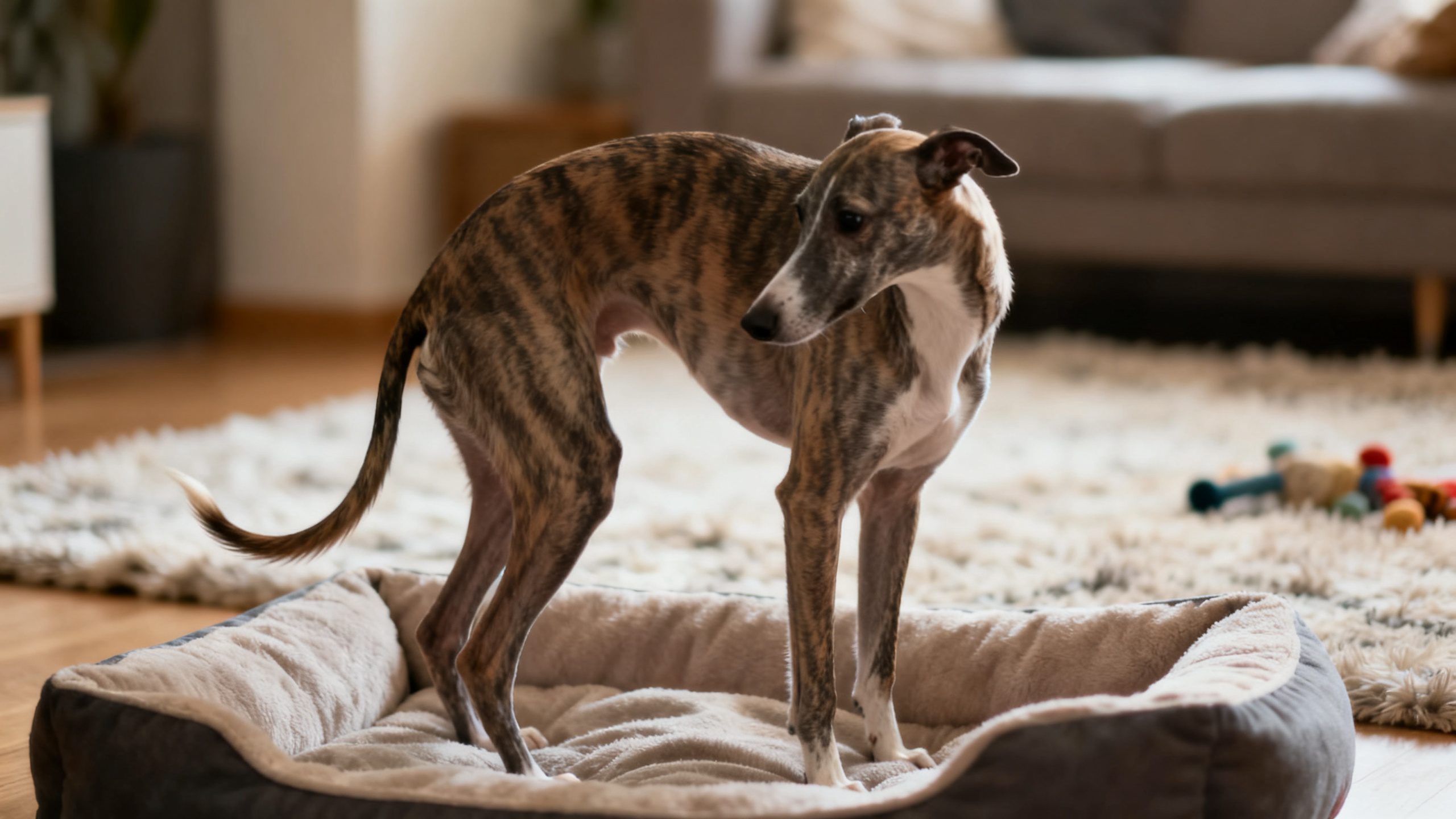
What the circling actually does
In the wild, circling served a few clear purposes. It flattened tall grass, cleared away sharp sticks or stones, and created a shallow nest that offered some insulation and a bit of cover. It also gave the dog a chance to check the area for anything unwanted before committing to lying down.
The behaviour also had a scent component. Dogs have scent glands in their paws, and the circling motion would mark the area as theirs. It signalled to other animals that the spot was claimed and created a familiar scent environment before settling.
Your dog doesn’t need to flatten grass or mark territory on a memory foam bed, but the instinct remains. It’s not something they think through. It’s just part of the process of lying down.
When the circling changes
Most of the time, circling is harmless and quick. But if a dog that circles ten or fifteen times before lying down, or one that circles and then gets up and starts again, might be struggling with something beyond instinct.
Here are the signs that suggest the circling has moved beyond normal behaviour:
- It takes much longer than it used to – if your dog is circling far more than before and seems unable to settle, that can point to anxiety or discomfort.
- They circle but don’t lie down – repeated attempts to settle that never actually result in lying down often indicate pain, particularly in the hips, back, or joints.
- The circling is paired with pacing or whining – restlessness combined with vocalisation suggests they’re not comfortable, either physically or mentally.
- It happens more at night or in unfamiliar places – circling that worsens in certain contexts can be linked to cognitive changes, especially in older dogs.
I’ve seen this pattern in older dogs particularly. The circling becomes longer, more agitated, and they seem frustrated by their own inability to get comfortable. If your dog’s age in human terms puts them in their senior years, the Dog Years to Human Years Calculator can help you understand where they are in their life stage and whether age-related changes might be playing a role.
Pain and joint problems
One of the most common reasons circling becomes excessive is joint pain. A dog that’s uncomfortable lying down will try different positions, circle more than usual, and struggle to find a way to settle that doesn’t hurt. Arthritis in the hips, elbows, or spine makes the act of lowering themselves difficult, so they delay it by circling.
You might also notice they take longer to get up once they’re down, or they avoid lying on hard surfaces entirely. If the circling looks laboured or frustrated rather than automatic, pain is the first thing to rule out.
Related:
Why does my dog follow me everywhere?
Why Does My Dog Eat Grass? What It Means and When to Worry
12 Strange Dog Behaviours Explained Simply
Why Does My Dog Stare at Me? What It Actually Means
Anxiety and compulsive behaviour
Some dogs circle excessively because they’re anxious. This can be generalised anxiety or specific to certain situations like being left alone, loud noises, or changes in routine. The circling becomes a self-soothing behaviour, something they do to manage their stress rather than to prepare a resting spot.
Compulsive circling is different again. It’s repetitive, difficult to interrupt, and often happens in response to frustration or confinement. Dogs that don’t get enough mental or physical stimulation sometimes develop compulsive behaviours, and circling is one of the more common ones.
If the circling feels like it’s on a loop and your dog seems unable to stop even when you redirect them, that’s a sign it’s moved beyond instinct.
Cognitive dysfunction in older dogs
In older dogs, excessive circling can be one of the early signs of cognitive dysfunction. Dogs with declining cognitive function often show changes in their sleep-wake cycle, increased restlessness at night, and repetitive behaviours that seem purposeless.
The circling in these cases isn’t about preparing a bed. It’s disorientation. They circle because they’ve forgotten what they were doing, or because they’re not entirely sure where they are. It’s one of the harder things to watch because the confusion is visible.
Other signs that point to cognitive decline include staring at walls, getting stuck in corners, reduced recognition of familiar people or places, and house-soiling that starts suddenly after years of being clean.
When to step in
If the circling is quick and your dog settles without issue, there’s nothing to fix. It’s normal behaviour and it’s not causing harm. But if it’s taking longer, looks uncomfortable, or is paired with other changes in behaviour or mobility, it’s worth addressing.
Here’s what helps depending on the likely cause:
- For joint pain — softer bedding with proper support, anti-inflammatory medication if your vet recommends it, and keeping your dog at a healthy weight to reduce strain on the joints.
- For anxiety — consistent routines, a quiet and predictable sleeping area, and in some cases calming supplements or behavioural support from a professional.
- For compulsive behaviour — more physical exercise, mental enrichment like puzzle feeders or scent work, and reducing triggers that lead to frustration or boredom.
- For cognitive dysfunction — keeping the environment calm and familiar, maintaining a predictable daily routine, and speaking to your vet about supplements or medications that support brain function in older dogs.
The key is recognising when the behaviour has changed. A dog that circled twice before lying down for years and now circles twelve times is telling you something. The circling itself isn’t the problem. It’s what’s underneath it.
What normal looks like
Normal circling is brief, purposeful, and ends with the dog lying down without hesitation. It might be one circle or three. It might include a bit of pawing at the bedding or a final adjustment before settling. But it’s quick and it doesn’t look like work.
If your dog circles, lies down, shifts position once or twice, and then stays put, that’s normal. If they circle, get up, circle again, walk away, come back, and repeat the process several times before finally lying down or giving up that’s entirely, different. It might be worth a chat with your vet, just to make sure everything is alright.
It’s usually nothing, until it’s not
Most of the time, circling is just what dogs do. It’s instinct left over from a time when lying down required more preparation than it does now. But when it changes, when it takes longer or looks uncomfortable or becomes something they can’t seem to stop, it’s worth getting it looked at by talking to your vet.
This article is for informational purposes only. For advice specific to your dog always speak to your vet.