
Living with dogs for any length of time means regularly watching them do something completely baffling and wondering what on earth is going on in their head. Why are you eating that? Why are you rolling in that? Why are you barking at a corner of the room where there is absolutely nothing? Why are you sitting on my feet when there is a perfectly good sofa six inches away?
I’ve asked these questions out loud, to a dog, who could not answer me. Many times. A lot of these strange dog behaviours seem random or weird are actually very logical once you understand how dogs experience the world.
Understanding why your dog does something doesn’t always fix the behaviour. But it does help you respond to it sensibly rather than just being baffled or frustrated by it. Most strange dog behaviours are completely normal. They just need a bit of context. Here are twelve of the most common ones.

1. Eating grass
This one gets a lot of worry. The most common reason is simply that they like it, or that something in their stomach needs settling. Dogs are not strict carnivores and have always eaten plant material. Occasional grass eating is normal. If it’s constant and followed by a lot of vomiting, mention it to your vet.
For a fuller explanation of why dogs eat grass and when to pay attention, this goes into more detail.
2. Circling before lying down
Their ancestors flattened grass to make a sleeping spot. The behaviour stuck, it’s instinct, not confusion. Some dogs do it a lot, some barely at all. If yours does it excessively or seems to struggle to settle, there’s more on what’s normal and what isn’t here.
3. Bringing you a toy when you come home
They’re excited and they want to do something with that excitement. Carrying something is a way of channelling it. It’s also a bit of an offering. Either way it’s a good sign, not a weird one.
4. Sitting on your feet
Closeness and comfort. Some dogs do this because they find your presence reassuring. It’s also a mild way of saying you’re mine. Not possessive in a concerning way, just connected.
5. Eating their own poop
Genuinely unpleasant, genuinely common. Puppies do it a lot and often grow out of it. In adult dogs it can be habit, dietary deficiency, or learned behaviour. It’s worth mentioning to a vet if it’s persistent, but it’s not as alarming as it feels.
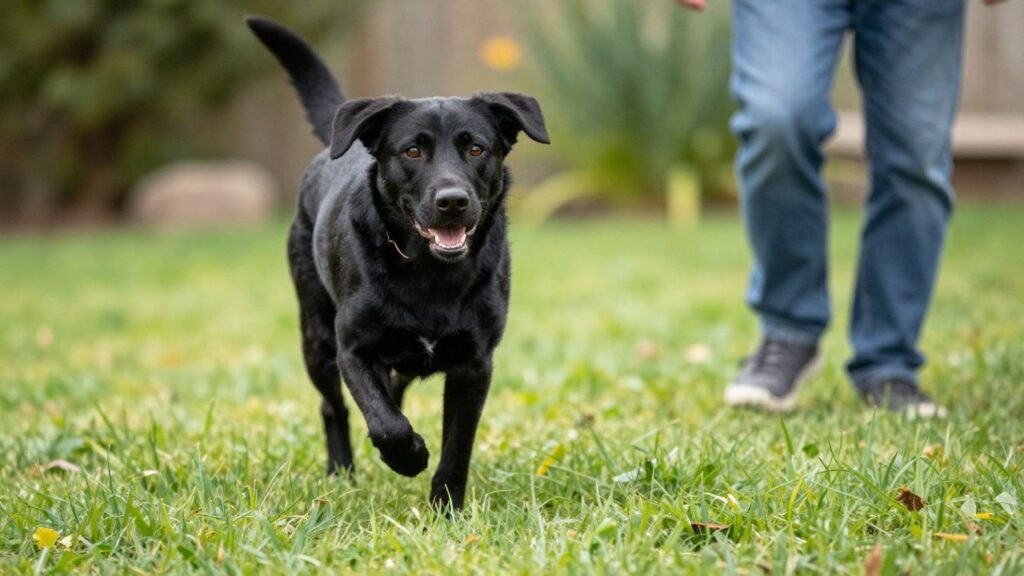
6. Zoomies
The sudden burst of running in circles for no obvious reason. This is a release of built-up energy or excitement. Completely normal. Most dogs get zoomies at certain times of day or after specific situations like bath time. Let them get on with it.
7. Licking your face
Communication and affection. Dogs lick faces of dogs they like and people they’re comfortable with. It’s also partly about salt and taste. If it bothers you, you can train a different greeting. If it doesn’t, it’s harmless.
Related:
Why does my dog follow me everywhere?
Why Does My Dog Stare at Me? What It Actually Means
50 Boredom Busters for Dogs on Rainy Days
Why Does My Dog Lick Me so Much?
8. Tilting their head when you talk
They’re trying to hear you better and make sense of what you’re saying. The head tilt helps them locate sound and see your face more clearly. It’s not just cute. It’s concentration.
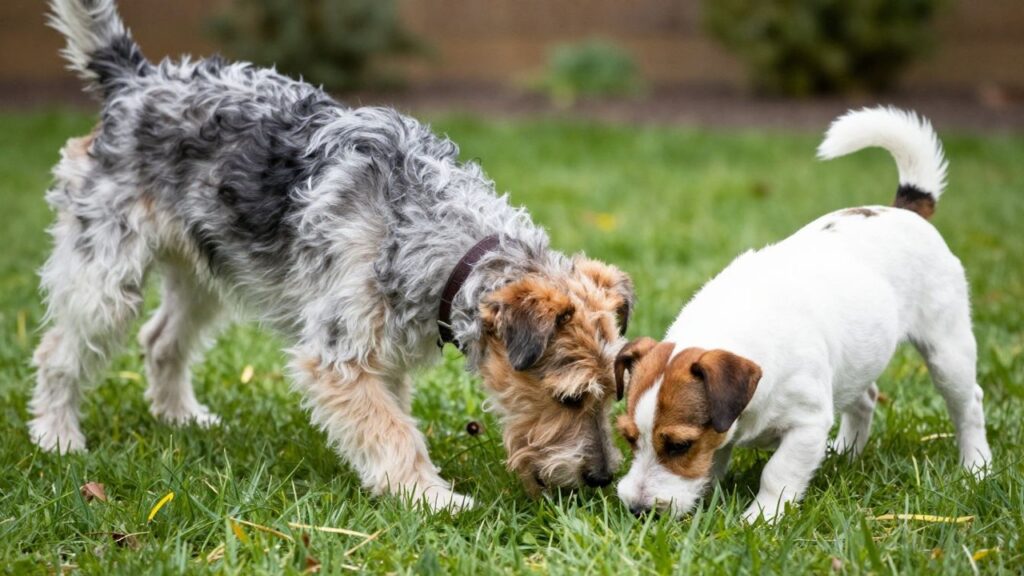
9. Sniffing other dogs in places you’d rather they didn’t
That area of a dog’s body contains a huge amount of information. Health, diet, mood, reproductive status. It’s the equivalent of a very efficient handshake. Rude by human standards, completely normal by dog standards.
10. Dragging their bottom on the floor
Usually the anal glands. These small glands can become full or uncomfortable and scooting is how dogs try to relieve the pressure. If your dog does this more than occasionally, get the glands checked. It’s a quick fix.
11. Barking at nothing
Usually not nothing. Dogs hear and smell things we can’t. They may be reacting to something outside, an animal nearby, or a sound beyond our range. Occasionally it can be a sign of cognitive changes in older dogs if it becomes frequent and happens at night. If you dog is barking at night then you may want to read more about it what to do here.
12. Rolling in horrible things
Mud, dead things, other animals’ mess. The most convincing theory is that it’s about masking their own scent, an instinct left over from when concealing their presence mattered. It doesn’t feel that way when you’re standing next to a dog covered in fox poo, but there you go.
Understanding Strange Behaviours
Once you start understanding why dogs do things, it changes how you respond to them.
Instead of getting frustrated that your dog is eating grass again, you just let them get on with it because you know it’s usually fine. Instead of telling them off for circling before they lie down, you wait the five seconds it takes because you know it’s just instinct. Instead of worrying that something is wrong when they bring you a toy every time you walk through the door, you enjoy it for what it is.
Some of these behaviours do occasionally signal something worth looking at. The bottom on the floor scooting is one. Increased barking at nothing in an older dog is another. Sudden changes in any behaviour that’s been consistent for years are always worth paying attention to, because dogs tend to change their behaviour when something has changed for them, physically or emotionally.
But most of the time, strange dog behaviour is just dog behaviour. They’re not trying to confuse you. They’re just being exactly what they are.
And honestly, once you’ve lived with a dog for a while, the strange stuff becomes part of what you love about them.
This article is for informational purposes only. For advice specific to your dog always speak to your vet.