For a long time I thought a stressed dog was obvious. Shaking. Cowering. Clearly unhappy. The kind of thing you couldn’t miss. But when you start to really look you see clearly signs your dog is stressed in the way they act.
Stress in dogs shows up in small things that are easy to write off as quirks, bad behaviour, or just the way your dog is. And because dogs can’t say I’m not okay right now, those small things are all they’ve got.
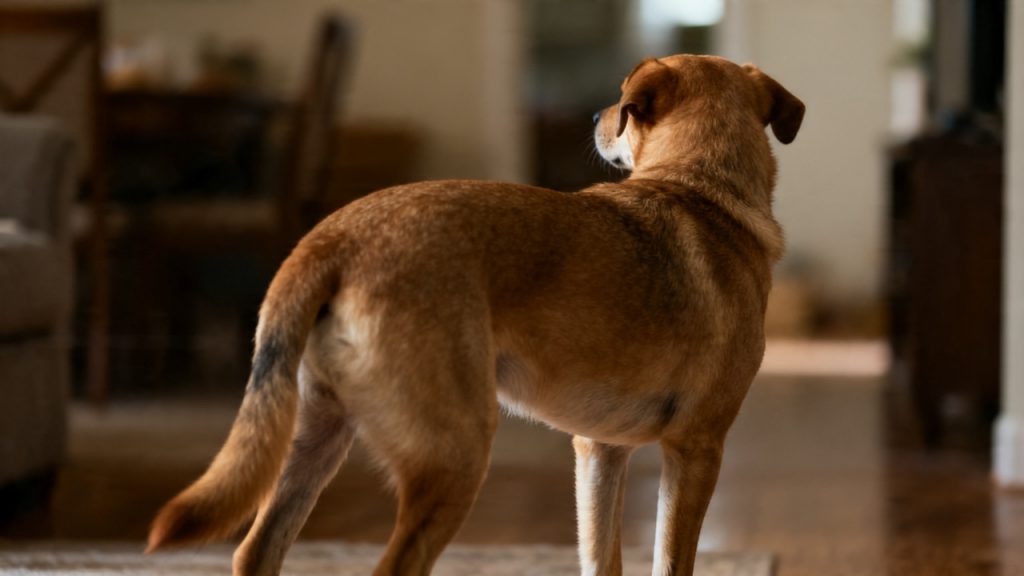
I’ve watched dogs show every sign on this list and had their owners genuinely not realise anything was wrong. Once you know what to look out for, you’ll see it and then you can actually do something about it.
I hope the following helps you identify some of the signs your dog is stressed with this context:-
1. They’re Yawning When They’re Not Tired
Yawning in dogs isn’t always about being sleepy. It’s what’s called a calming signal, something dogs do to manage their own stress levels or to communicate to another dog or person that they’re uncomfortable.
You’ll notice it most in situations where your dog is under pressure, at the vet, around unfamiliar dogs, or when there’s tension in the house. Once you start looking for it you’ll see it more clearly and in situations where it makes complete sense.
2. They’re licking their lips a lot
Same idea as the yawning. Lip licking outside of mealtimes or after eating is a stress signal. It’s quick and subtle, which is exactly why most people miss it entirely. A dog that licks their lips when a stranger approaches, when another dog gets too close, or when they’re being asked to do something they find difficult is telling you something. It’s one of the most overlooked signs on this list.
3. They’re Panting But They’re Not Hot
Panting has two very different causes and it’s worth being able to tell them apart. Temperature panting makes sense in context, it’s a warm day, they’ve been running, they’re cooling down.
Stress panting doesn’t fit the context. It happens in cool rooms, in the car, during fireworks, at the vet, in situations where there’s no physical reason to be hot. The panting looks the same but the situation tells you which one it is.
4. They Can’t Settle
A dog that’s pacing, getting up and lying down repeatedly, moving from room to room without purpose, or just unable to relax is a dog whose nervous system is activated. Something has them on alert and they can’t switch it off.
This is one of the more obvious stress signs and one that tends to get labelled as the dog being annoying or attention seeking rather than what it actually is, which is a dog that’s struggling to feel calm.
5. They’re Shedding More Than Usual
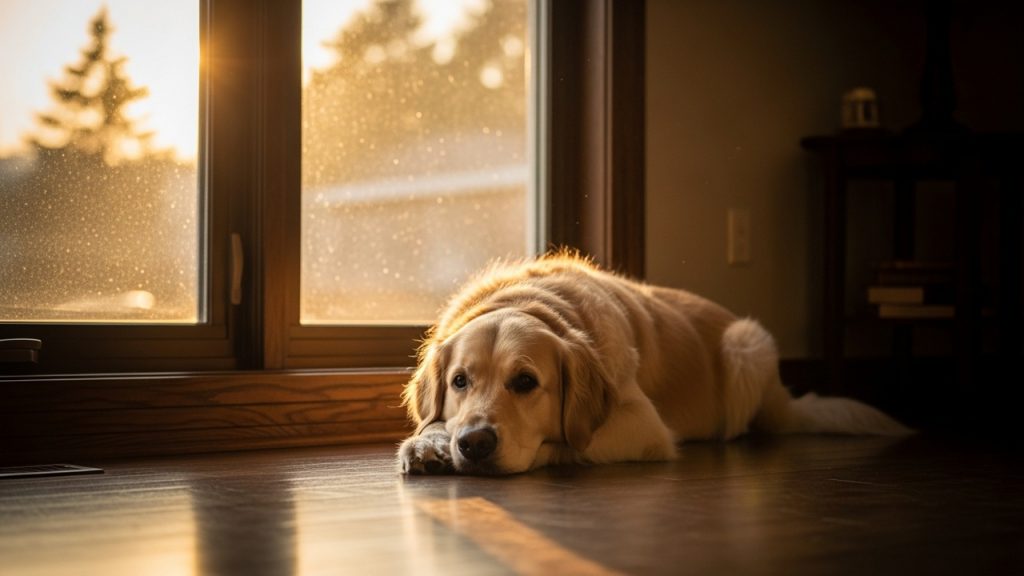
Stress shedding is real and most people only notice it at the vet when suddenly there’s fur covering everything. A dog’s coat responds to their stress levels in a similar way to how humans lose hair during stressful periods.
If your dog is shedding significantly more than normal and nothing has changed with their diet or health, stress is worth considering as a factor.
6. They Lose Interest In Food
A dog who normally eats enthusiastically and suddenly shows no interest in their bowl is worth paying attention to. Stress and anxiety suppress appetite in dogs just as they do in people.
It doesn’t automatically mean something is physically wrong, but a dog that goes off their food is always telling you something has changed. If it lasts more than a day or two it’s worth looking at what else is going on.
7. They’re Avoiding Eye Contact
A relaxed dog makes comfortable easy eye contact with people they trust. A stressed dog looks away, turns their head to the side, or makes their whole body look smaller and less visible.
This is called a cut-off signal and it means the dog is trying to reduce interaction because interaction feels unsafe or overwhelming right now. It gets misread as the dog being aloof or uninterested when it’s actually the opposite, they’re very aware of what’s happening and trying to manage it.
8. Their Tail Is Down Or Tucked
Tail position is one of the more readable indicators of how a dog is feeling once you’re paying attention to it. A relaxed dog carries their tail in a natural position for their breed, loose and easy. A stressed dog carries their tail lower than usual, holds it stiff, or tucks it toward their belly.
Not every stressed dog gives you a full tail tuck, but a tail that’s consistently lower or stiffer than normal is a signal worth noticing alongside the other signs on this list.
9. They’re Destroying Things
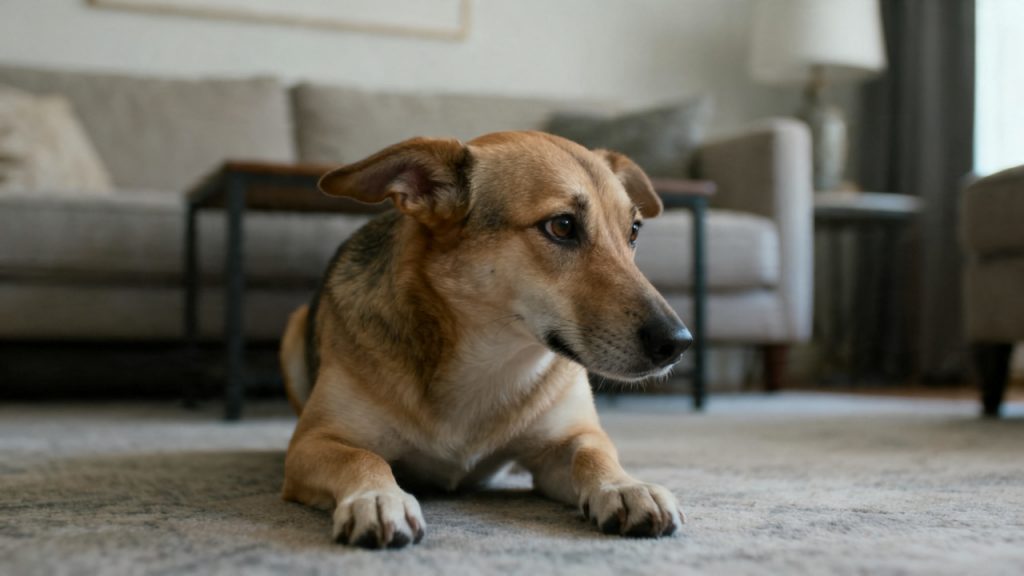
Chewing furniture, shredding cushions, digging at carpets or doors. This gets written off as naughtiness almost every time, especially in younger dogs, and occasionally it is just a dog that needs more exercise or mental stimulation.
But destruction is frequently a sign of anxiety, frustration, or unmet stress. The behaviour itself is the symptom.
The stress or boredom or anxiety underneath it is the actual problem. Telling the dog off for the destruction without addressing what’s driving it rarely works long term.
Things to Remember
The important thing to remember is that stress in dogs usually has a cause. Sometimes it’s obvious. A house move, a new baby, building work next door, fireworks. Sometimes it’s subtler. A change in routine, someone in the household going through something difficult, a new pet, pain that hasn’t been diagnosed yet.
If your dog is showing a handful of these signs consistently and nothing obvious has changed, it’s worth looking at it seriously, but always within the right context. Dogs pick up on things we don’t always notice. Tension in the home. Changes in how much time they’re getting with you. Physical discomfort that’s making everything harder to cope with.
A vet conversation is always a good first step when stress signs are persistent, because sometimes what looks like anxiety has a physical cause underneath it. Joint pain, for example, can make a dog much more reactive and unsettled than they’d otherwise be. Getting that ruled out or treated can change everything.
And if it is purely behavioural, a good trainer or behaviourist who uses positive methods can make a real difference. You don’t have to figure it out on your own.
Your dog is telling you something. These signs are the language they’re using. Getting better at reading it is one of the most useful things you can do for them.