This article looks at signs your dog is becoming a senior, focusing on the everyday changes that tend to come first. For most dogs things just happen gradually but to be honest its different for every dog. If you’re noticing things and wondering what to look out for then this article can help.
Because the earlier you spot these things, the more you can do. A softer bed ordered in time. A vet conversation before the stiffness gets worse. A small change to the walk routine before the long ones become a problem. Small things, done early, add up to a much more comfortable life for your dog.
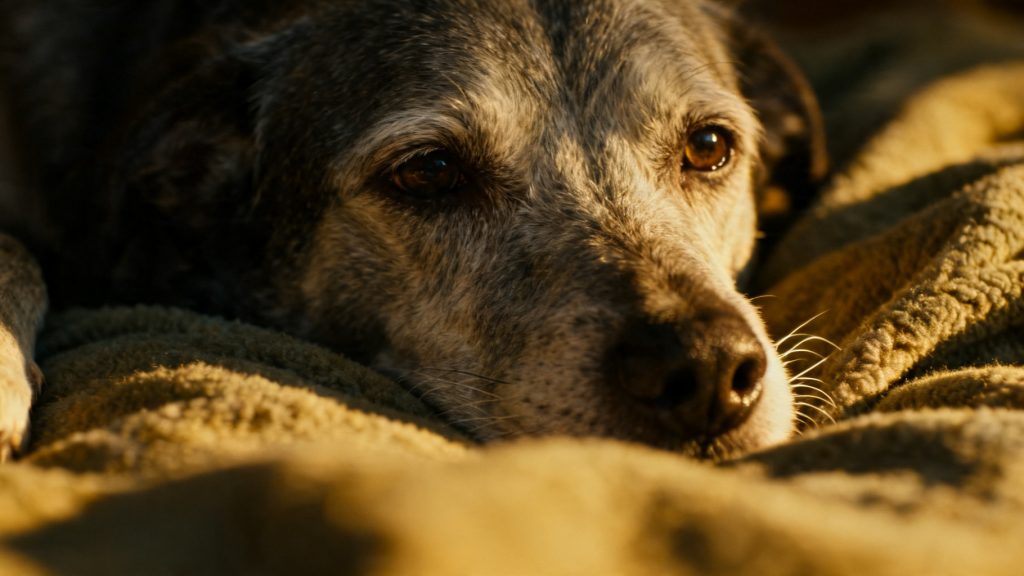
Here’s what to watch for.
1. They sleep more than they used to
Not just a bit more. Noticeably more. Where they used to be up and about, now they’re happy to stay in their bed for long stretches. Sleep is important for older dogs, so don’t panic, but do notice.
2. They’re slower to get up
That moment when they haul themselves off the floor with a bit of effort. Or they pause before jumping on the sofa. Stiffness after resting is one of the earliest signs of joint changes in dogs.
3. They take longer to warm up on walks
The first five minutes used to be full pace. Now they need a gentle start before they get going properly. This is common and worth paying attention to.
4. They’re less interested in play
They still want to be with you. They just don’t want to chase the ball for twenty minutes any more. That’s okay. Play changes shape as dogs get older, it doesn’t disappear entirely.
5. Their muzzle is going grey
The grey creeps in around the nose and eyes first. Some dogs go grey early, some late. It’s not always a reliable age indicator on its own, but combined with other signs, it tells a story.
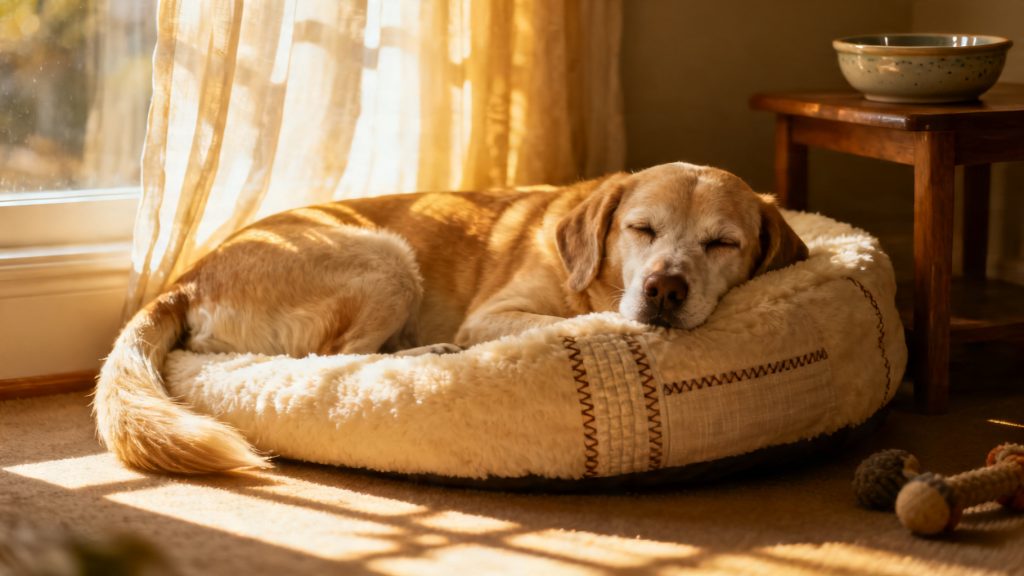
6. They’re a bit stiffer after lying down for a long time
This is joint stiffness showing up. They shake it off after a minute or two of moving around, but you’ll notice it. Worth mentioning to your vet at the next check-up.
7. They’re drinking more water
This one matters. Increased thirst can be a sign of several health conditions that become more common in older dogs, including kidney changes and diabetes. If you notice this, get it checked.
8. Their hearing isn’t what it was
You call them and they don’t come. You think they’re ignoring you. They might not be. Hearing loss in older dogs is common and gradual. Test it by making a sound out of their sight line and see if they react.
9. Their eyesight is changing
A bluish haze in the eyes is often normal aging. Cloudiness, bumping into things, or hesitating in the dark are signs worth discussing with your vet.
10. They startle more easily
If they can’t hear or see as well, sudden movements or sounds catch them off guard. An older dog that snaps when touched unexpectedly isn’t being difficult. They’re startled.
11. They’re more sensitive to temperature
Cold bothers them more. A warm bed matters more than it used to. Some older dogs feel the heat more too. Pay attention to where they choose to lie and whether that’s changed.
12. Their appetite has changed
Some older dogs eat less. Some develop fussiness they never had before. Some eat the same as always. Any significant change in appetite is worth flagging to your vet rather than just waiting to see.
13. They want to be closer to you
Some dogs become more clingy in their senior years. Following you from room to room, wanting to be in contact. This is common and it’s not a bad thing. They’re finding comfort in your presence.
14. Their coat has changed
Duller, thinner, drier, or just different from how it used to be. Coat changes can reflect aging, nutrition, or underlying health changes. Worth keeping an eye on.
15. Recovery takes longer
After a longer walk, an exciting day, or an illness, they bounce back more slowly than they used to. What used to be one rest day is now two or three. That’s just how their body works now.
What Matters Most at This Stage
None of these signs on their own means something is seriously wrong. Most of them are just aging. Normal, expected, manageable aging. The reason it’s worth knowing them is that aging well for a dog, just like for us, depends a lot on the support around them.
A dog whose owner notices the stiffness early and gets it looked at is going to be more comfortable than one whose owner assumes it’s just slowing down. A dog whose bed gets swapped for something softer before the joint pain gets bad is going to sleep better. A dog whose walks get shorter and more frequent rather than staying long until they can’t manage them any more is going to stay mobile for longer.
This list is the stuff I wish someone had handed me earlier. So you can see what’s happening clearly and do something useful with that information while there’s still plenty of time to make a difference. And if you’re still worried, a conversation with your vet is always the right starting point.