My dog has a talent for looking absolutely devastated whenever I eat something in front of him. Doesn’t matter what it is. A plain cracker. A piece of fruit. Something he would almost certainly hate if he tried it. The eyes go big. The chin goes on the knee. The guilt starts.
And sometimes you think, can they actually have a bit of this? So what are human foods safe for dogs?
I’ve asked that question more times than I can count. I’ve also made the mistake of assuming something was fine when it wasn’t, and the mistake of assuming something wasn’t fine when it absolutely was. After years of living with dogs and spending a lot of time looking things up the hard way, I’ve got a pretty clear picture of what’s genuinely safe to share and what to keep away from them.
This list is the stuff that’s actually fine. Not fine in a grey area, probably okay, fingers crossed kind of way. Fine as in most dogs can have it without any problem, as long as you’re sensible about how much and how often.
A few things worth saying before we get into it. Safe doesn’t mean unlimited. Everything here works as an occasional treat or a small addition to their normal food, not a replacement for a proper diet. If your dog has a health condition, kidney problems, diabetes, allergies, anything like that, check with your vet before adding new foods in. And if you’re ever genuinely unsure about something that isn’t on this list, look it up before you give it. Thirty seconds of checking beats an anxious night wondering if they’re okay.
Right. Here’s what they can actually have.
1. Carrots
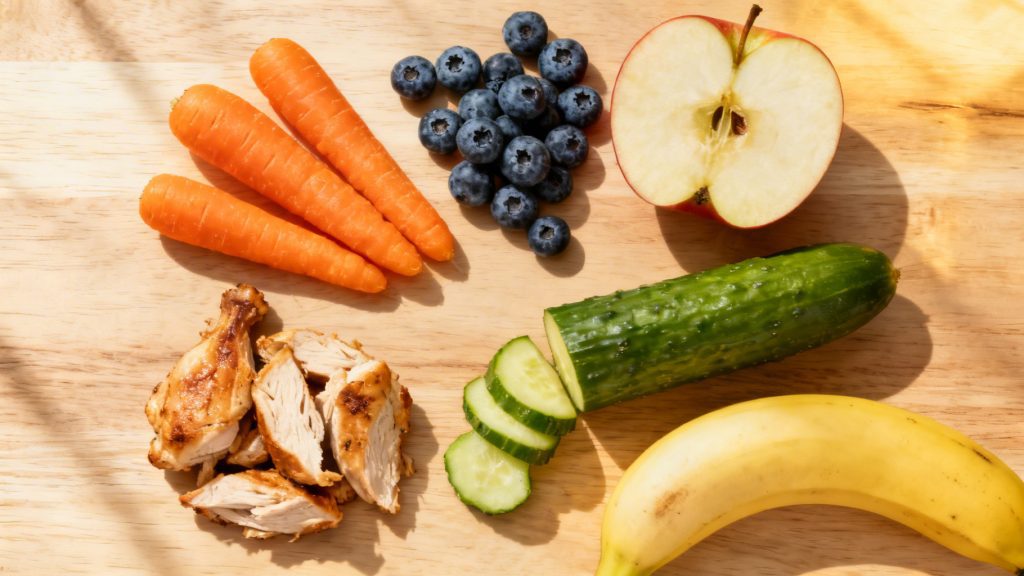
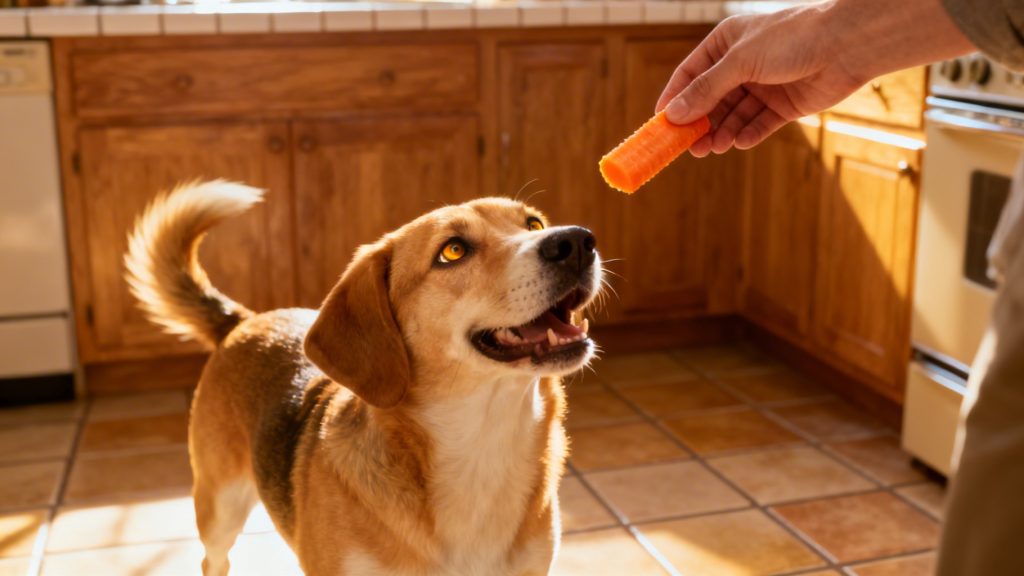
Raw or cooked, carrots are one of the best things you can give a dog. They’re low in calories, good for teeth, and most dogs genuinely enjoy them. Raw carrots give them something to chew which is satisfying in itself. Frozen carrots are especially good for dogs who need something to work on for a while, or for puppies who are teething. Easy, cheap, and almost universally liked.
2. Blueberries
Small, easy to hand over, and full of antioxidants. Most dogs will take them straight from your hand without hesitation. They work well as training treats if your dog likes the taste, and the size means you can give quite a few without worrying about calories adding up. Fresh or frozen both work fine.
3. Cooked chicken
Plain cooked chicken with no seasoning and no bones is one of the most useful things to have in your repertoire as a dog owner. It’s easy to digest, which makes it good for dogs with upset stomachs, and most dogs find it more appealing than their regular food which makes it useful for hiding medication. Boiled is better than fried. Strip it off the bone completely before giving it.
4. Pumpkin
Plain cooked or tinned pumpkin is genuinely useful, not just safe. It works well for digestive issues in both directions — it can help with constipation and with loose stools, which makes it one of those things worth keeping in the cupboard. The important thing is to use plain pumpkin, not pumpkin pie filling, which contains spices and sugar that aren’t safe. A spoonful stirred into their regular food is enough.
5. Apple slices
The flesh of an apple is fine for dogs and most enjoy the crunch and sweetness. The part to be careful about is the core and seeds. Apple seeds contain a compound that releases cyanide in small amounts and builds up over time, so removing them should just become a habit. Slice the apple, remove the core, hand over the rest. Simple.
6. Plain rice
Plain boiled white rice is a staple for dogs with upset stomachs. It’s bland, easy to digest, and filling without being rich. Combined with plain boiled chicken it’s the classic settle-their-stomach meal that actually works. Not something to give every day as a regular food because it doesn’t have much nutritional value on its own, but extremely useful to have in your back pocket.
7. Peanut butter
Most dogs are completely obsessed with peanut butter and the good news is it’s fine in small amounts. The critical thing is checking the ingredients every single time you buy a new jar, because some peanut butters contain xylitol, an artificial sweetener that is seriously toxic to dogs. What you want is peanut butter with nothing in it except peanuts, maybe salt. Check the label. Don’t assume the brand you’ve always used hasn’t changed its recipe.
8. Eggs
Cooked eggs are a solid source of protein for dogs. Scrambled or boiled both work well. Skip the butter, the oil, and the seasoning — just the egg on its own. Raw eggs get debated among dog owners but cooked is the safer and simpler choice. One egg occasionally is plenty. Not an everyday food but a useful addition.
9. Watermelon
On a warm day watermelon goes down well with most dogs. The flesh is high in water content which is good for keeping them hydrated, and most dogs enjoy the taste. Remove the seeds and the rind before giving it. The rind can cause digestive upset and the seeds, while not as dangerous as apple seeds, are better avoided. Just the pink flesh, in chunks.
10. Green beans
Plain cooked or raw green beans are worth knowing about especially if your dog needs to lose a bit of weight. They’re low in calories but filling, which means you can add them to a meal to bulk it out without adding much to the calorie count. Some dogs like them raw and crunchy, some prefer them cooked and softer. No seasoning, no butter, nothing added. Just the beans.
11. Banana
Banana is higher in sugar than most things on this list so it’s not for every day, but as an occasional treat it’s fine. Most dogs like the taste and the soft texture. It works well mashed into a Kong or frozen in small pieces. Because of the sugar content, a few small pieces is plenty rather than half a banana in one go.
12. Cucumber
Cucumber is low calorie, high in water, and gives dogs something crunchy to eat without the calories of a biscuit. Good for dogs who are always looking for something to chew. Serve it plain with no dressing and cut into manageable pieces. Most dogs enjoy it though some look at it with deep suspicion, which is their right.
13. Cooked sweet potato
Plain cooked sweet potato is a genuinely nutritious option. Good fibre content, good vitamins, and most dogs enjoy the taste. The key word is plain — no butter, no seasoning, not raw. Raw sweet potato is hard to digest and not worth the trouble. Mashed or in chunks both work well mixed into their regular food or given as a treat.
14. Oats
Plain cooked oats are fine for dogs and sometimes used as a base for homemade dog treats. The ones to avoid are instant oats that come pre-flavoured with sugar, dried fruit, or artificial sweetener. Plain oats cooked in water with nothing added are what you want. Not something most people think to give their dog but worth knowing about if you’re making your own treats.
15. Coconut
Small amounts of fresh coconut or unsweetened desiccated coconut are safe for most dogs. Coconut oil gets talked about a lot by dog owners for coat condition and some find it helpful, though the evidence is mixed and it’s high in saturated fat so large amounts aren’t a good idea. As with everything on this list, a small amount occasionally is the sensible approach rather than making it a daily thing.
A Few Things That Absolutely Aren’t Safe
Before you go, it’s worth being clear on the things that are definitely off the table, because some of them surprise people.
Xylitol is the one people miss. It’s an artificial sweetener found in some peanut butters, chewing gum, certain yoghurts, and a lot of sugar-free products. It causes a serious and rapid drop in blood sugar in dogs. If you’re giving your dog peanut butter and you haven’t checked the ingredients recently, check now. It should say nothing except peanuts, maybe salt.
Grapes and raisins are a hard no. Even small amounts can cause serious kidney problems in dogs, and nobody fully understands why. It doesn’t matter if your dog has had them before without obvious problems. The risk isn’t worth it.
Onions and garlic, in any form, raw, cooked, or powdered, damage red blood cells in dogs. It builds up over time rather than causing an immediate reaction, which makes it easy to miss. This includes things like gravy granules and stock cubes, which often contain onion powder.
Chocolate is the one most people know about. Theobromine, the compound that makes it dangerous, affects dogs very differently to humans. Dark chocolate and cooking chocolate are the most dangerous, but none of it is safe. Keep it out of reach.
Cooked bones are a different kind of risk. Raw bones are generally considered safer because they’re less likely to splinter. Cooked bones can shatter into sharp pieces that cause internal damage. This includes chicken bones, which are one of the most common culprits.
Macadamia nuts, avocado, and alcohol round out the list of things to just keep away from dogs entirely.
How to Actually Use This List
The foods above aren’t a meal plan. They’re options. Ways to make a frozen Kong more interesting. Something to use as a training treat when you’ve run out of the proper ones. A way to give your dog a bit of variety without worrying about whether you’re doing something stupid.
What works for one dog doesn’t always work for another. Some dogs have sensitive stomachs and certain foods, even safe ones, will disagree with them. Start with a small amount of anything new and see how they get on before making it a regular thing.
The dogs I’ve known who’ve been happiest around food aren’t the ones who got the most treats. They’re the ones whose owners paid attention. Noticed what they liked, what sat well, what didn’t. That kind of attention is worth more than any list.
Use this as a starting point. Keep the unsafe list in mind. And when in doubt, just ask your vet. That’s what they’re there for.