Most dog beds don’t fail visibly. They fail quietly, in the middle, over months, and by the time you notice, the bed has probably been underperforming for a while. Knowing how often to replace a dog bed is less about following a schedule and more about knowing what to feel for, you can usually feel the difference before the bed even looks worn.
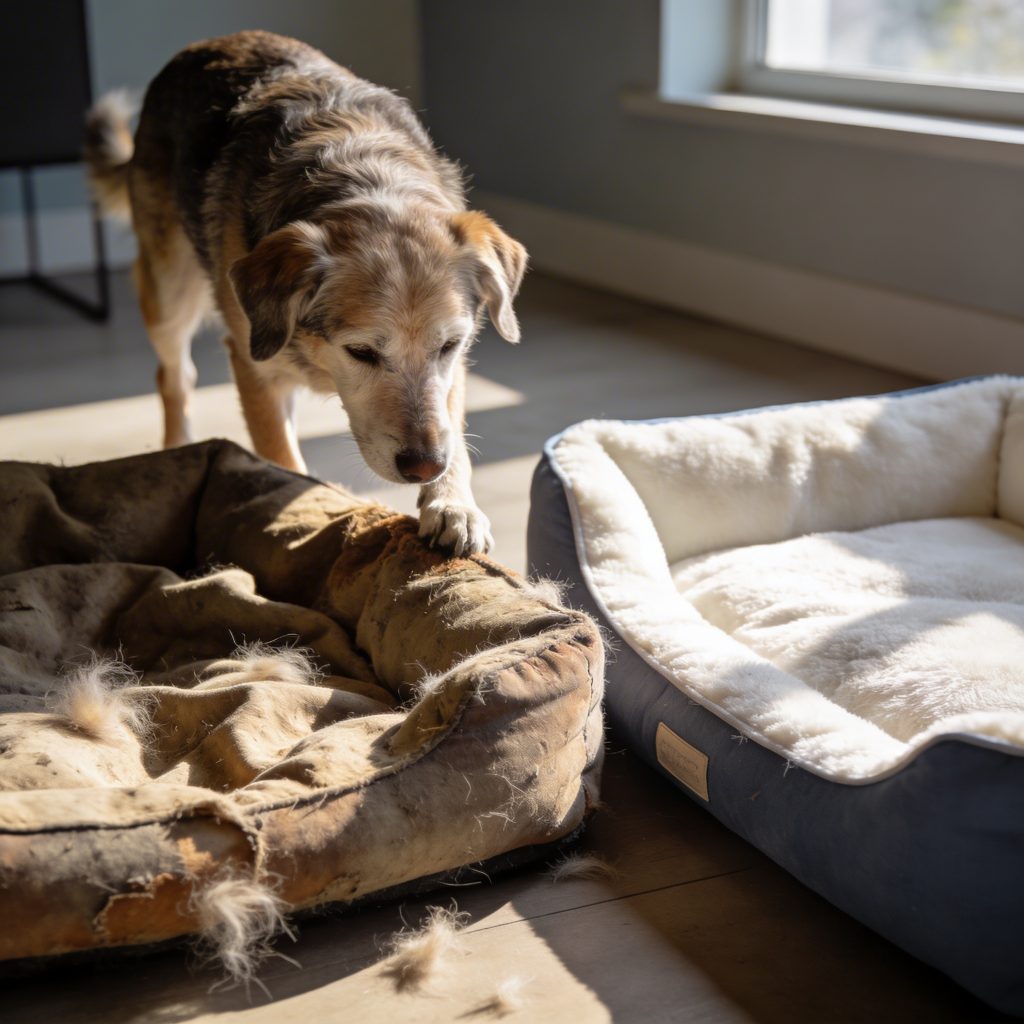
The giveaway is often in your hands when you pick the bed up to wash it. What used to have some weight and resistance folds like a folded jumper. The centre has thinned down to almost nothing. From across the room it still looks like a dog bed. Up close, it’s not doing much.
Dog Bed Replacement Situations At A Glance
Beds are usually replaced for a handful of reasons.
- flattened padding
- uneven or lumpy filling
- smells that return after washing
- damaged covers or broken seams
- allergens trapped inside the foam
- a dog whose joints now need better support
Often more than one of these appears at the same time.
What’s Actually Happening Inside the Bed
A dog lies in the same spot most nights, which means the same pressure points slowly compress the padding. If you’re curious how that affects support, our article on how big a dog bed should be explains how pressure and body position change the way beds wear out.
Over time, the padding slowly compresses, the filling shifts away from the middle, foam loses its rebound, and the surface becomes less even.The centre becomes lower than the rest of the surface, which means joints that should be supported are gradually sinking closer to the floor.
The bed still looks usable, but the support underneath is no longer the same. A few things speed this up:
- Frequent washing, which breaks down fill and foam faster than use alone
- Heavier dogs, who compress materials significantly quicker than lighter ones
- Digging and nesting habits, which redistribute fill unevenly
- Humid rooms or damp coats, which degrade foam from the inside
The changes are gradual enough that they’re easy to miss, especially when the bed is in the same corner it’s always been in.
How Long Dog Beds Actually Last
There’s no single answer, because beds are made with very different materials. As a rough guide:
- Polyfill beds – often flatten within 6 to 18 months
- Basic foam beds – usually hold up for 1 to 2 years
- Orthopedic foam beds – commonly last 2 to 4 years, depending on foam density
- Bolster beds – the centre pad softens first; the side bolsters tend to last longer
- Elevated cot beds – frames can last several years, though fabric slings sometimes stretch earlier
Weight is the biggest variable. A 35 kg dog will compress the same foam in half the time a 12 kg dog would. If you have a large or heavy breed, it’s worth checking the bed more regularly rather than waiting for an obvious sign.
The Checks That Tell You More Than Looking At It
The quickest way to check a bed is to press the centre and feel the padding.
Press test: Push your palm firmly into the centre. If you feel the floor with moderate pressure, the fill has gone. A healthy bed should push back.
Edge test: Press near the border of the bed. If the edge collapses rather than holds, the usable sleeping area is already smaller than it looks, dogs end up gravitating to the centre, which compresses faster as a result.
Rebound check: Press and release. Good foam returns to shape within a second or two. Foam that stays dented has lost its structure.
These take about thirty seconds and tell you more than the bed’s age or how it looks from a distance.
Signs the Bed Has Gone Past Useful
The bed itself gives clear signals, and so does the dog.
Signs in the bed:
- A permanent dip or trough in the centre that doesn’t recover
- Padding that feels uneven or lumpy under the surface
- Foam that collapses immediately rather than giving gradually
- Seams pulling apart at the entry point or corners
- A smell that returns within a day or two of washing the cover
Signs in the dog:
- More repositioning than usual before settling
- Starting to prefer the rug, the floor, or the sofa
- Slower to rise in the morning, with visible stiffness
- Lying with part of the body off the bed consistently
Dogs often adapt to a surface that isn’t quite right rather than refusing it outright. If your dog has started choosing the floor instead of the bed entirely, our article on why dogs stop using their bed looks at several other reasons that can cause that change.
When Hygiene Becomes the Reason
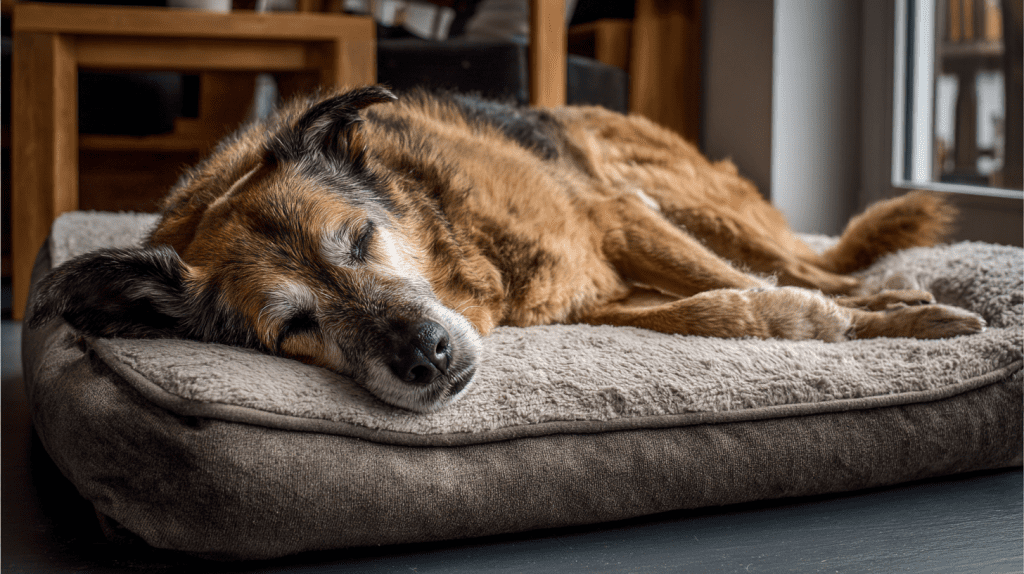
A bed can still pass the press test and still need replacing. Foam and fill absorb more than just body heat – skin oils, moisture from wet coats, bacteria, and allergens build up in the core over time in ways that washing the cover doesn’t address.
If a smell comes back quickly after washing, or the bed has been through a lot of wet winters with a dog who swims or spends time outdoors, the inside of the bed has probably absorbed more than cleaning can fix. At that point, hygiene rather than structure is what’s driving the decision.
When the Dog’s Needs Change the Timeline
Sometimes the bed hasn’t fully worn out, but it’s no longer right for the dog using it. As dogs age, joints become less tolerant of uneven or soft surfaces. A bed that felt comfortable at five may not offer enough support at ten, especially through the hips and shoulders.
Signs that the bed has become the wrong type rather than just worn out:
- Morning stiffness that improves once the dog has been moving for a while
- A preference for harder surfaces like tile or wood over the bed
- Reluctance to lie down, or frequently shifting position during the night
In these cases, moving to a denser orthopedic dog bed often makes more difference than simply replacing the old bed with the same style.
When Repair Still Makes Sense
Not everything needs a full replacement. Some beds are designed with replaceable inserts, which means the cover and outer structure can stay while the foam core gets swapped out. That’s worth knowing before you buy, a bed with a replaceable insert generally works out cheaper over time and produces less waste.
Topping up polyfill in a bolster or adding a supportive pad underneath a flattening bed can also extend its life for a while, as long as the outer structure is still intact. If the core has collapsed, though, repairs tend to be short-lived.
A Simple Way to Think About Timing
Rather than picking a date on a calendar, the more practical approach is to check the bed every few months, press the centre, feel the edges, and notice how the dog is sleeping. A bed that still rebounds, feels even, and stays fresh after washing is still doing its job. When the centre stays dented, the padding feels inconsistent, or the smell comes back quickly, it’s usually time.
How often you end up replacing a dog bed will depend on what it’s made of, how heavy your dog is, and how the bed is used day to day. For most dogs on a decent quality bed, somewhere between one and three years is realistic, shorter for larger breeds or cheaper materials, longer for well-made orthopedic foam with a washable cover.
Most beds don’t suddenly give out. They just get a little flatter and less supportive over time. It stops doing what it was there to do, and the dog adjusts around it without making any fuss about it at all. Checking the support now and then keeps those changes from going unnoticed.