Naming a male dog tends to go one of two ways. Either the name comes quickly and feels obvious almost immediately, or you spend two weeks going back and forth between a shortlist that keeps changing.
The qualities that make great boy dog names that hold up over time are fairly consistent. It needs to be easy to say quickly, clear enough for the dog to pick out from background noise, and something that still fits when he’s older and slower and has stopped being the chaotic puppy he was at the beginning.
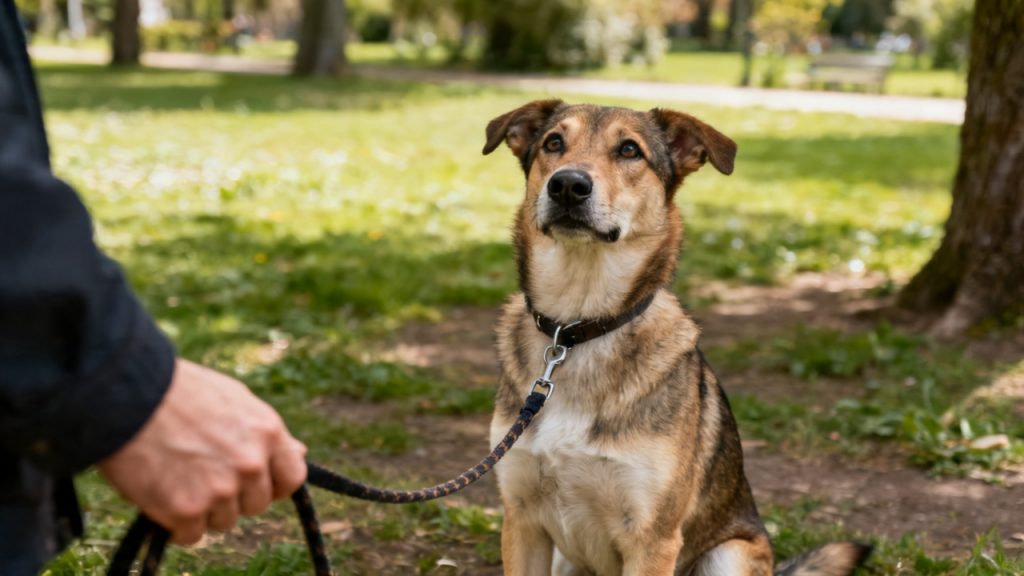
Here you’ll find boy dog names that are easy to say, easy for a dog to hear, and ones that suit a dog at every stage of his life.
The patterns that make a name work are worth understanding before you choose, because once you know what to look for the options get a lot easier to narrow down.
Related: Cute Girl Dog Names That Are Easy and Actually Work
1. Short Names Hold Up Better in Practice
A short name is easier to get out when you need it and easier for a dog to pick up during training. One or two syllables tends to be the range that works best. Long enough to sound like a proper name, short enough to say fast when he’s heading somewhere he shouldn’t.
Names like Finn, Duke, Milo, Archie, Rex, Beau, and Jasper all sit in this range. They carry clearly at a distance, they work in a busy park, and none of them are difficult to say in a hurry or at the end of a long day.
Before settling on anything, it helps to say it out loud in different situations.
Calm, urgent, tired, slightly exasperated. Some names that feel right sitting quietly start to change sound in different moods. Testing across a few different tones usually reveals whether a name is right for you.
2. Classic Names That Have Earned Their Place
Some names have been given to dogs for generations because they simply work. They’re familiar without being dull, they age well, and most of them come with natural shorter versions that fit different moments differently.
- Charlie (Charl, Char)
- Buddy (Bud)
- Oscar (Os)
- Teddy (Ted)
- Monty (Mont)
- Alfie (Alf)
- Murphy (Murph)
These names carry warmth without being sentimental about it. They suit a young dog and they suit an older one. A name that works across a dog’s whole life without any awkwardness is worth more than something that fits perfectly at twelve weeks but feels slightly off by the time he’s eight.
The natural test for these is to say the full name, then the shortened version, and see how both feel. If the recall sounds right too, Monty, come, Charlie, here, you’ve probably found something worth sticking with.
3. Names That Use Sounds Dogs Respond To
Certain sounds carry better than others, both at a distance and through background noise.
Hard consonants tend to cut through clearly. K, T, P, B, D, and G all work well in this sense. Names that end on a vowel sound tend to ring out rather than drop off, and anything with a clear punchy syllable in it tends to get a dog’s attention more reliably than something softer.
Names like Rocket, Buster, Dexter, Dingo, Banjo, Cooper, and Tucker naturally use these sounds. They’re easy to project across a field and they don’t lose their shape when you say them quickly or at a distance.
The simple test is to go into another room and call the name at normal volume. If it sounds clear it will probably work. If it softens or blurs it might not carry as well as you need it to when it matters.
4. Avoid Names That Sound Like Commands
This is the one people tend to overlook until they’re already in training and starting to notice the problem. Dogs work on sound patterns rather than meanings, and a name that sounds close to a common command creates a low level of confusion that makes consistent responses harder to build.
The most obvious clashes are names that rhyme with commands used regularly. Ray sounds like stay. Kit sounds like sit. Bo sounds like no. Joe sits close to no as well depending on how you say it. None of these are disastrous but all of them add a layer of ambiguity that you don’t need, particularly in the early weeks when the dog is still learning what everything means.
The check is straightforward.
- Say the name back to back with the commands you use most. Sit, stay, down, no, come, leave it.
- If nothing sounds similar you’re fine. If something trips you up it’s worth finding an alternative before the name is established, because changing it later is harder than getting it right first.
Some easy alternatives if you like a name that clashes. Bear instead of Beau. Dash instead of Ash if ash sounds like your recall cue. Cruz instead of something that sits close to a command. Same feel, different sound.
5. Let the Dog Tell You What Fits
The name that suits him is usually more obvious after a couple of days at home than it is before he arrives. Puppies show their character fairly quickly and a name chosen after watching him settle in tends to fit better than one picked from a list before you’d met him.
Calm, steady dogs tend to suit names with a bit of weight to them. Duke, Bear, Hugo, Hector, Angus, Chester. Names that feel settled and unhurried, which tend to reflect that kind of dog back at you.
Dogs with a lot of energy and not much interest in sitting still tend to suit something sharper and faster. Rocket, Rebel, Scout, Dash, Ziggy, Ace. Names that have a bit of movement in them.
Dogs that seem to carry themselves with some kind of quiet authority even as puppies, and there are always a few, tend to suit something more understated.
Arthur, George, Frank, Stanley, Percy, Barnaby are good names.
And if you want something clean and unfussy that doesn’t belong firmly in any one category, names like Bram, Cole, Reid, Flynn, Colt, and Archer all do that without feeling like they’re trying too hard.
The vet test is worth doing here too. Say the name alongside your surname as if you’re booking an appointment. Duke Matthews. Oscar Webb. Finn Hill.
Sometimes that combination either confirms the name or makes you realise something isn’t quite sitting right.
What Holds Up Over Time
The names that last are usually the ones that felt easy from the start. Not the ones you had to convince yourself about or the ones that seemed clever on paper. Just the ones that felt natural when you said them out loud from the beginning.
A dog’s name gets used across a lot of different situations over the years. At the back door, in waiting rooms, across fields, in the quiet moments at home when nobody else is listening. A name that works in all of those without any adjustment, that still sounds right when he’s old and grey and taking his time about everything, is usually the right one.