Blueberries are one of those things that work well for dogs at any age. They’re small, soft, low in calories, and easy to use fresh or frozen. You can give them as they are, mash them into food, or bake them into something your dog can carry off and enjoy more slowly.
If you’re looking for simple blueberry dog treats to add into your dog’s routine, this article can help. Below are two easy recipes, along with what you actually need to know about using them safely.
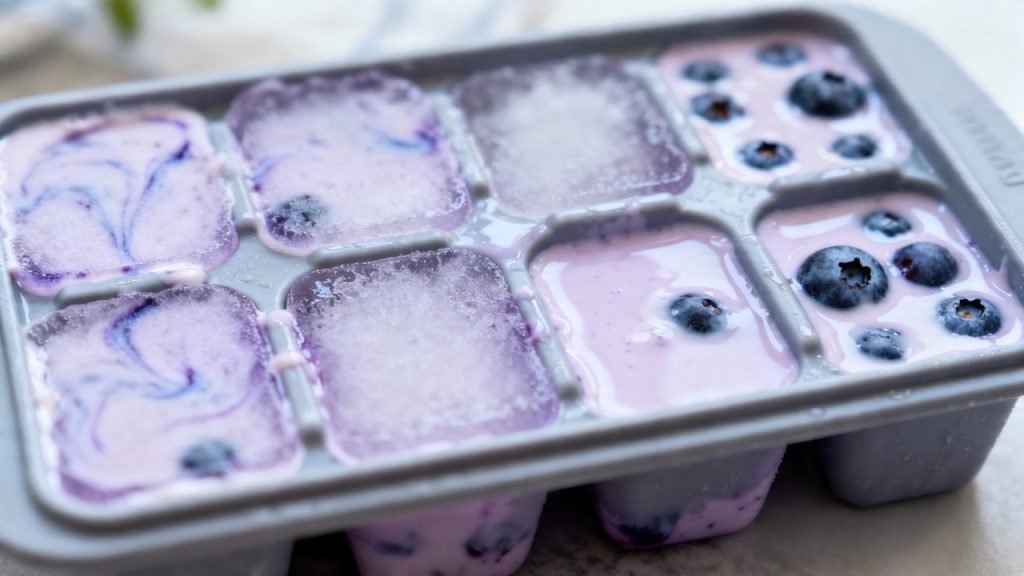
Frozen Blueberry Pops
This is the easiest one to make and takes about five minutes to put together.
You’ll need:
- 1 cup plain, unsweetened yogurt
- ½ cup blueberries (fresh or frozen)
Mix the yogurt and blueberries together until evenly combined. Spoon the mixture into an ice cube tray or silicone mould and freeze until solid. A few hours is usually enough.
Serve one cube at a time. Keep the rest frozen and use within four to six weeks.
A quick note on yogurt. Some dogs don’t tolerate dairy well. If your dog gets gassy or has a soft stomach after trying these, that’s usually the reason. Plain Greek yogurt tends to be easier to digest, or you can swap it for a dairy-free alternative like coconut yogurt.
Always check the label before buying. You’re looking for plain, unsweetened, with no artificial sweeteners.
For dogs with sensitive teeth, let the cube sit out for a few minutes before giving it so it softens slightly.
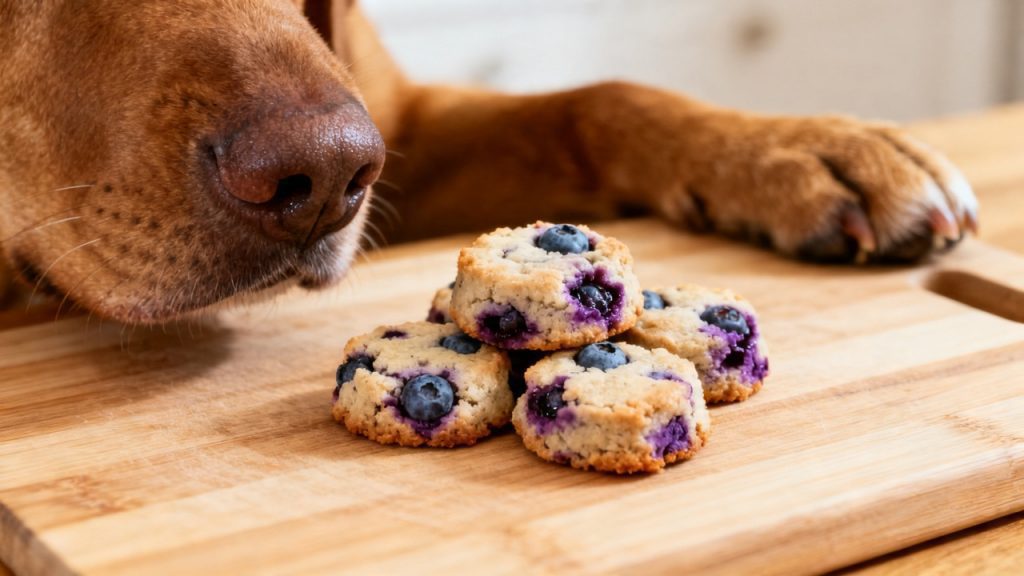
Soft Baked Blueberry Bites
These take a bit more effort but are easier to store and carry.
You’ll need:
- 1 cup whole wheat flour or oat flour
- ½ cup mashed ripe banana
- ½ cup pureed blueberries
- 1 egg
Mix everything into a thick batter. It should be scoopable but not runny. If it feels too stiff, add a teaspoon of water at a time until it loosens slightly.
Drop spoonfuls onto a lined baking tray, leaving a bit of space between each one.
Bake at 160°C (325°F) for 12 to 15 minutes. They should feel set when lightly pressed, but still soft inside.
Let them cool completely before giving any to your dog.
Store in an airtight container in the fridge and use within three to five days. You can freeze extras for up to three months and thaw them overnight in the fridge when needed.
If your dog doesn’t tolerate wheat, oat flour works just as well.
Can Dogs Eat Frozen Blueberries?
Yes, frozen blueberries are safe for dogs and can actually be easier to store and use.
Some dogs enjoy them straight from the freezer, especially in warmer weather. Others may find them too hard, so letting them thaw slightly first is often a better option.
Frozen blueberries also work well in recipes, as they break down easily when mixed or baked.
Storing Everything Properly
Fresh blueberries keep well in the fridge for about a week. It’s best to wash them just before use so they last longer.
Frozen blueberries can be used straight from the freezer and will keep for several months.
Frozen yogurt treats should stay in the freezer and be used within four to six weeks. Once thawed, don’t refreeze them.
Baked treats can be kept in the fridge for a few days or frozen for longer storage.
If anything smells off or the texture has changed, it’s best to throw it out.
What to Look for in Shop-Bought Blueberry Treats
If you’d rather not make your own, there are plenty of options available.
Look for real blueberries or blueberry powder near the top of the ingredient list. Avoid anything with added sugar, artificial colours, or vague “flavouring” instead of actual fruit.
Check the calorie content per treat as well. Some are higher than you’d expect for their size, which can add up quickly if you’re using them regularly.
Are Blueberries Safe for Dogs?
Yes, plain fresh or frozen blueberries are safe for most dogs.
What you want to avoid are anything processed or sweetened. That includes blueberries in syrup, pie filling, flavoured products, or anything with added sugar or artificial sweeteners. Xylitol in particular is toxic to dogs, even in small amounts.
Always wash fresh blueberries before giving them to your dog. It helps remove any residue and means you know exactly what they’re eating.
Like any fruit, they’re best introduced gradually. Blueberries contain fibre, and too many at once can cause a loose stomach.
Can Puppies and Senior Dogs Eat Blueberries?
Puppies and older dogs can both have blueberries, but the way you give them might need to change slightly.
For puppies, keep portions small and introduce them gradually. Their stomachs are more sensitive, so even a small amount of fruit can cause a reaction if it’s new.
For older dogs, texture matters more. Fresh blueberries can be a bit firm, especially if they’re cold. Lightly mashing them or using them in softer treats like the baked bites tends to work better.
If your dog has missing teeth or struggles with harder foods, thawed frozen blueberries or softened treats are usually easier to manage.
How Many Blueberries Can Dogs Have?
A few at a time is enough. Small dogs usually do well with one to three berries, medium dogs around four to six, and larger dogs up to ten as a rough daily amount if you’re giving them on their own.
If you’re using blueberries in treats, you’ll likely use more overall, but what matters is how much your dog actually eats in a day. Treats, including fruit, should make up no more than about ten percent of their daily food.
If you’re not sure how your dog’s age affects this, you can check it using this dog age calculator
What to Do If Your Dog Eats Too Many Blueberries
If your dog eats more than intended, the most common issue is a mild stomach upset.
You might notice:
- loose stools
- a bit of gas
- reduced appetite for a short time
In most cases, this settles on its own within a day. If symptoms are more severe or don’t improve, it’s worth checking with your vet, especially for smaller dogs where portion size has a bigger impact.
What This Means for Your Dog
Blueberries are one of the easier things you can add to your dog’s routine.
You don’t need to overthink it. Use them fresh, frozen, or baked into something simple, keep the portions sensible, and see how your dog gets on with them.
If they work, they’re an easy alternative to more processed treats. If they don’t, you’ve not lost much by trying.