
Tiny dog breeds that don’t shed include the Maltese, Yorkshire Terrier, Shih Tzu, Bichon Frise, Havanese, Affenpinscher, Brussels Griffon, Toy Poodle, Chinese Crested, and Bolognese. These breeds produce minimal loose hair because they have hair rather than fur, or in some cases, very little coat at all. None of them are completely shed-free, but they’re about as close as you get in the dog world.
I’ve spent enough time cleaning dog hair off furniture, clothes, and places I didn’t even know a dog could reach. It’s amazing how in small living spaces, or multiple dog households how fast hair accumulates. And if you like me you don’t want to spend half their life lint-rolling everything they own.
What Non-Shedding Actually Means
No dog is completely non-shedding. Hair grows, dies, and falls out. That’s how it works. But some breeds shed so little that you barely notice it, and that’s what people mean when they say non-shedding.
The difference usually comes down to coat type. Dogs with hair rather than fur tend to shed less because their growth cycle is longer. The hair keeps growing instead of falling out seasonally. Dogs with fur go through heavy shedding periods twice a year. Dogs with hair don’t, or at least not to the same degree.
You still have to groom them. In fact, you have to groom them more. The hair doesn’t fall out on its own, so it mats if you don’t brush it or clip it regularly. Less hair on your floor means more time with a brush or more money at the groomer. That’s the trade.
Why Size Matters
Tiny breeds shed less than larger dogs partly because there’s less dog to shed from. A Great Pyrenees and a Maltese might both be low-shedding relative to their size, but one of them produces a fraction of the hair simply because it weighs three kilos instead of forty.
Small dogs also fit better into routines where grooming is easier. Brushing a five-kilo dog on your lap takes ten minutes. Brushing a thirty-kilo dog takes planning and often professional help. For people who want a dog that doesn’t shed much and doesn’t require a huge time or space commitment, tiny breeds make sense.
1. Maltese
The Maltese has long, silky white hair that doesn’t shed much at all. It grows continuously, so it needs regular brushing to prevent mats and tangles. If you keep the coat long, you’re brushing daily. If you clip it short, grooming becomes easier but you’re still brushing a few times a week.
They’re small, usually under three kilos, and they don’t take up much space. They’re also surprisingly sturdy for their size. I’ve seen Maltese keep up on longer walks without any trouble, though they’re just as happy sitting on the sofa. They can be vocal, and they tend to bond closely with one or two people rather than spreading affection evenly across a household.
2. Yorkshire Terrier
Yorkshire Terriers have fine, straight hair that behaves more like human hair than dog fur. It sheds minimally, but it tangles easily if you don’t stay on top of it. Most people either keep them in a short puppy cut or commit to daily brushing if they want the long coat.
They’re confident beyond their size, sometimes to the point of being reckless. They’ll challenge much larger dogs without thinking it through. They’re also clever and quick to learn, which makes training easier as long as you’re consistent. They weigh around three kilos and fit comfortably in small living spaces.
3. Shih Tzu
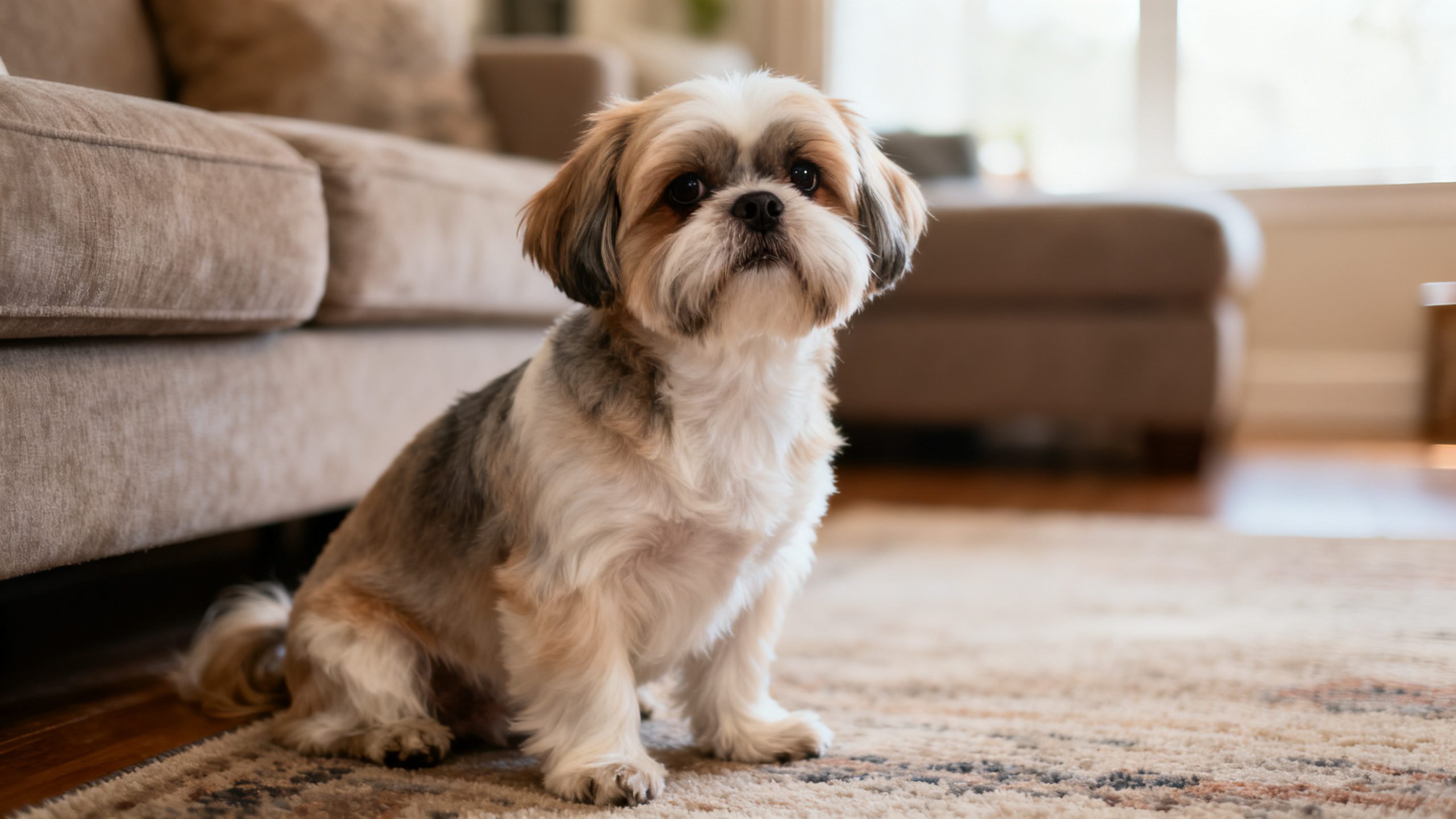
Shih Tzus have a double coat of long hair that sheds very little. The hair grows long and needs regular grooming, usually every six to eight weeks if you’re clipping it short, more often if you’re keeping it long. Daily brushing is necessary to prevent mats.
They’re calm and adaptable. They don’t need a lot of exercise, though they enjoy a walk. They’re good with families and generally friendly with strangers and other dogs. They weigh between four and seven kilos, which makes them small but not fragile. If you want to get a sense of where your dog is in human terms, the Dog Years to Human Years Calculator gives you a more accurate picture than the old seven-to-one rule.
4. Bichon Frise
The Bichon Frise has a curly, dense coat that traps hair instead of letting it fall. This makes them low-shedding, but the coat mats quickly if you don’t brush it regularly. Most owners keep them clipped short and groomed every four to six weeks.
They’re cheerful and sociable. They like people and don’t do well left alone for long periods. They’re playful without being hyperactive, and they’re generally easy to train. They weigh between five and eight kilos, which is small but solid.
5. Havanese
Havanese have long, silky hair that sheds very little. The coat can be kept long with daily brushing or clipped short for easier maintenance. Either way, regular grooming is necessary to keep the hair from matting.
They’re friendly and adaptable. They’re good with children, other dogs, and strangers. They don’t need a lot of exercise, but they enjoy being involved in whatever’s happening around them. They weigh between three and six kilos and fit well into small homes or flats.
Related:
10 Best Small Dog Breeds for First Time Owners
25 Cutest Small Dog Breeds That Stay Small
10 Dog Grooming Tips for Beginners What You Can Do at Home

6. Affenpinscher
The Affenpinscher has a wiry, dense coat that sheds minimally. The coat needs regular brushing to prevent tangles, and occasional hand-stripping or clipping to keep it tidy. They’re scruffy-looking by nature, which is part of their appeal.
They’re bold and independent. They’re not lap dogs despite their size. They’re curious and confident, sometimes stubborn. They weigh around three to five kilos and have more personality than you’d expect from something that small.
7. Brussels Griffon
Brussels Griffons come in two coat types: rough and smooth. The rough coat sheds very little and needs regular brushing and occasional hand-stripping. The smooth coat sheds more and isn’t what you’d choose if shedding is a concern.
They’re sensitive and bond closely with their people. They don’t like being left alone and can become anxious if they’re isolated too often. They’re expressive, often described as having human-like faces, and they’re surprisingly aware of what’s going on around them. They weigh between three and five kilos.
8. Toy Poodle
Toy Poodles have curly, dense coats that shed very little. The coat grows continuously and needs regular grooming every six to eight weeks, plus frequent brushing to prevent mats. They’re one of the most popular low-shedding breeds for good reason.
They’re intelligent and trainable. They learn quickly and respond well to consistent handling. They’re active and need regular exercise, more than some other tiny breeds. They weigh between two and four kilos and adapt well to different living situations as long as they get enough mental and physical activity.
9. Chinese Crested
The Chinese Crested comes in two varieties: hairless and powderpuff. The hairless variety has very little coat and sheds almost nothing. The powderpuff has a full coat of soft hair that sheds minimally but needs regular brushing.
They’re affectionate and bond closely with their people. They’re sensitive to cold and need clothing in cooler weather if they’re hairless. The hairless variety is also prone to skin issues, so regular care is necessary. They weigh between two and five kilos and are best suited to people who can give them consistent attention.
10. Bolognese
The Bolognese has a fluffy, cotton-like coat that sheds very little. The coat mats easily, so it needs daily brushing or regular clipping. They’re less common than some of the other breeds on this list, but they’re just as effective at not shedding.
They’re calm and devoted. They prefer being near their people and don’t do well with long periods of isolation. They’re gentle and quiet, less yappy than some tiny breeds. They weigh between three and four kilos and suit quieter households.
What You’re Actually Signing Up For
These breeds don’t shed much, but they all need grooming. Regular brushing, clipping, and in some cases professional grooming every few weeks. The hair doesn’t fall out on its own, so it builds up if you don’t manage it. That’s the price of not finding hair all over your home.
Most of these breeds are also companion dogs. They’ve been bred to be close to people, which means they don’t do well left alone for long stretches. They’re small, but they’re not low-maintenance in terms of attention. If you’re out of the house most of the day, that’s something to think about before choosing one of these breeds.
Tiny dogs also live a long time. Many of these breeds live well into their teens. That’s a long commitment, and it’s worth being honest with yourself about whether you’re ready for it before you bring one home.
Grooming and What It Actually Costs
Professional grooming for a tiny breed usually costs if done every six to eight weeks, can build up to a significant expense of a year depending on where you live and what needs doing.
You can groom at home if you’re willing to learn. Clippers, brushes, and a bit of practice will get you there. But it takes time, and if you get it wrong, the dog ends up uncomfortable or the coat gets damaged. Most people end up using a groomer at least some of the time.
Brushing at home is necessary regardless. Even if you’re paying for professional grooming, you’re brushing between appointments to keep the coat from matting. For some of these breeds, that’s daily. For others, a few times a week. Either way, it’s regular.
Choosing the Right One
Low-shedding tiny breeds vary in temperament, energy, and what they need from you. A Toy Poodle needs more exercise and mental engagement than a Shih Tzu. A Yorkshire Terrier is more independent than a Havanese. A Chinese Crested needs more careful management than a Maltese.
Think about what you can actually manage, not just what appeals to you. If you’re out most of the day, a breed that struggles with isolation is going to be difficult. If you don’t have time for daily brushing, a breed with a long coat is going to mat. If you want a dog that’s calm and quiet, a terrier might not be the right choice.
All of these breeds are small, low-shedding, and suited to people who want a dog that doesn’t leave hair everywhere. Beyond that, they’re all different. Match the breed to your life, what you’re willing to do regularly, and what you’re realistic about maintaining over the next decade or more.
This article is for informational purposes only. For advice specific to your dog always speak to your vet.