
DIY dog pyjamas are easier to make than most people expect, and they are useful for older dogs who feel the cold, dogs recovering from surgery, or anxious dogs who settle better with something soft around them. You do not need sewing skills or specialist materials. Most of these can be made from things you already have at home, and the ones that do require basic stitching are forgiving enough to manage with a needle and thread.
I found that shop-bought options either fitted badly or cost more than seemed reasonable for something my dog would wear indoors for a few hours. The homemade versions worked better because I could adjust them as I went. Here are ten ideas that work.
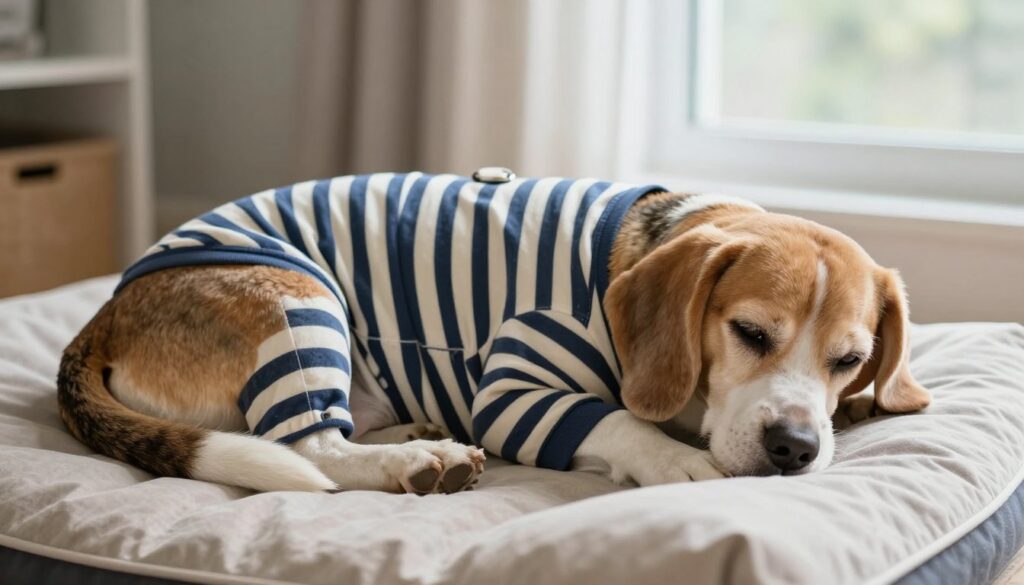
Old T-Shirt with Leg Holes
This is the simplest version and works well for small to medium dogs. Take an old t-shirt, put it on the dog backwards so the neck hole sits at the base of the tail, and cut four small holes where the legs need to go. The sleeves hang loose or can be trimmed off. The fabric sits snug without being tight, and because it is cotton, it breathes.
Start with the leg holes smaller than you think they need to be. You can always make them bigger, but if you cut too much the shirt slides around. Mark the spots with a pen before you cut, then test the fit before trimming further.
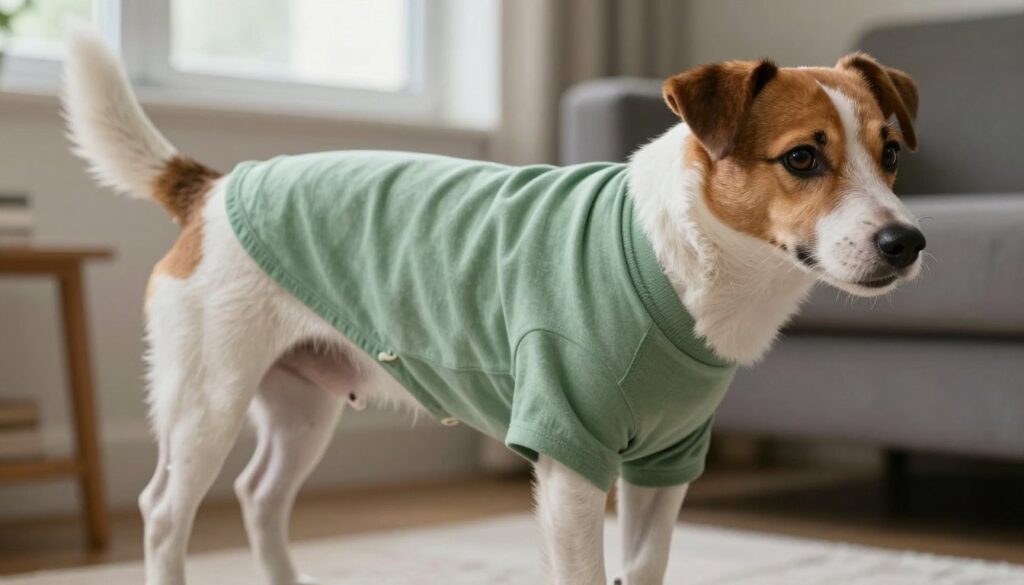
Fleece Tube with Velcro
Cut a rectangle of fleece, wrap it around the dog’s body, and attach a strip of velcro along the edge. No sewing required if you use adhesive-backed velcro. The fleece does not fray, so the edges can stay raw. This works particularly well for dogs who hate things going over their heads.
Measure from the back of the neck to the base of the tail for length, and around the widest part of the chest for width. Add a few centimetres to the width so the velcro overlaps comfortably. If the dog is barrel-chested, add more. If they are narrow, less.
Sleeve from a Jumper
Cut the sleeve off an old jumper, make two small slits for the front legs, and pull it over the dog like a tube top. The ribbed cuff sits at the back and holds it in place. This version is warm, stretchy, and takes less than five minutes to make.
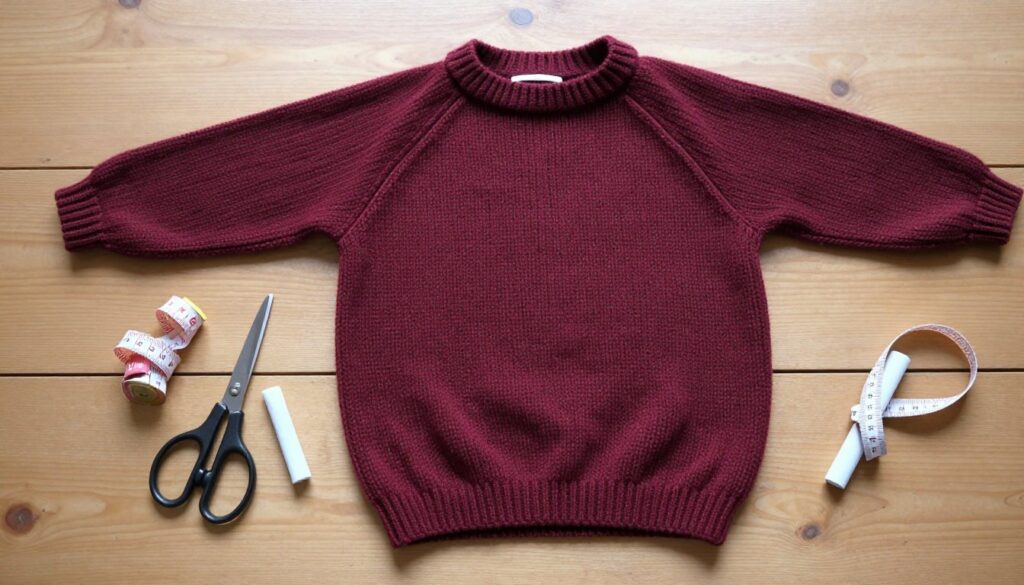
The sleeve needs to be wide enough to fit over the dog’s chest without pulling tight. If it is too snug, it restricts breathing. Test it with the dog standing before you cut the leg holes. Once those are in, the fit is more or less locked.
Pillowcase with Arm and Neck Openings
Use a soft pillowcase, turn it inside out, and cut holes for the neck and front legs. The opening at the bottom of the pillowcase becomes the back, and you can leave it open or gather it with elastic. This one suits larger dogs and works well if you want something that covers more of the body without being fitted.
Cotton pillowcases work better than polyester. They wash well, do not hold static, and feel softer against the skin. If the dog has stitches or a healing wound, this version gives coverage without rubbing.
Baby Onesie Adapted
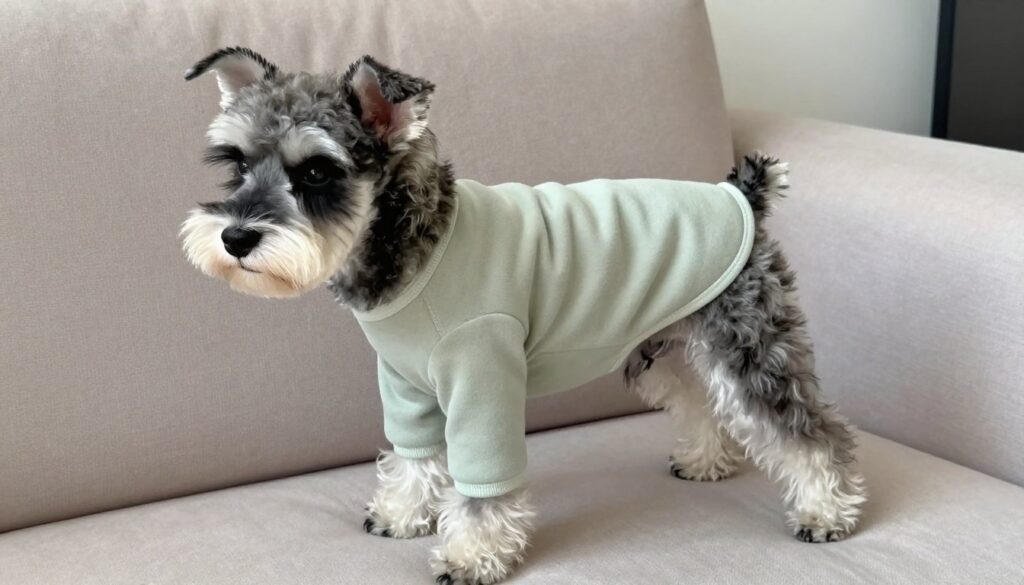
A baby onesie can be turned into dog pyjamas by cutting off the legs and adjusting the neck opening. The snaps at the bottom make it easy to get on and off, and the fit is surprisingly good for small dogs. This is one of the few options that looks intentional rather than improvised.
The sizing is not straightforward. A twelve-month onesie might fit a Jack Russell, but a Dachshund will need something longer and narrower. Try it on before you cut anything. If the neck is too tight, widen it gradually. If the leg openings are too high, adjust them down.
Hoodie with Back Closure
Take an old hoodie, cut it down the back, and add velcro or buttons to close it. The hood can stay on or come off depending on whether your dog tolerates things near their ears. This version gives full coverage and works well for dogs who need warmth after a bath or during colder months.
The cut needs to run straight down the spine so the two sides line up when you fasten them. If it veers off to one side, the whole thing pulls crooked. Use a ruler or fold the hoodie in half before cutting to keep it even.
Thermal Leggings for Barrel-Chested Breeds
Thermal leggings can be turned into pyjamas for dogs with wide chests and short legs. Cut the leggings to length, make four leg holes, and use the waistband as the back closure. The stretchy fabric moves with the dog and does not bunch up when they lie down.
This works best for Bulldogs, Staffies, and similar builds. The fabric needs to be thick enough to hold its shape but stretchy enough to pull on without a fight. If the leggings have a drawstring waist, remove it before you start.
Towelling Robe Conversion
A child’s towelling robe can be shortened and adjusted to fit a medium to large dog. Cut off the sleeves, shorten the length, and use the belt loops or tie to fasten it around the middle. The absorbent fabric is useful for dogs who have just been bathed or who drool heavily and need something that wicks moisture away from the skin.
Towelling is bulky, so this version looks less neat than the others. It also takes longer to dry if it gets wet. But it is warm, soft, and forgiving on older dogs with sensitive skin or pressure sores.
Leg Warmers for Skinny Breeds
Leg warmers cut in half and pulled over the torso work surprisingly well for thin dogs like Whippets and Italian Greyhounds. The ribbed fabric stays in place without elastic, and because leg warmers are meant to stretch, they accommodate different body shapes without pulling tight.
You will need two leg warmers to make one full garment. Cut each in half, and use the top sections for the front and back of the body. The ribbing sits at the neck and tail end, which stops the fabric from rolling up. If your dog has long legs, the bottom sections can be used as actual leg warmers for added coverage.
Polar Fleece Blanket Wrap
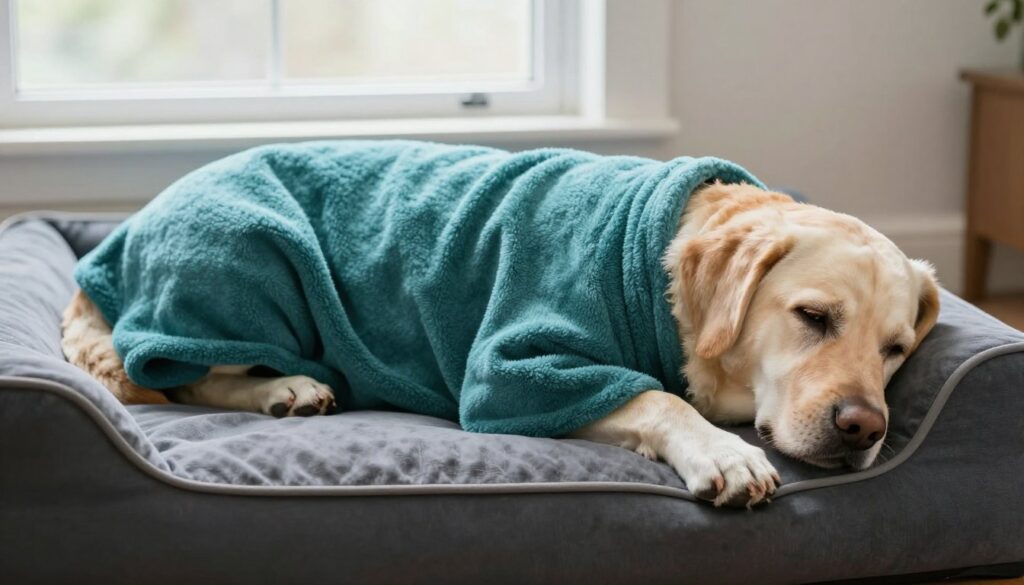
Cut a rectangle from a polar fleece blanket, wrap it around the dog, and secure it with a few stitches or safety pins. This is the least structured option, but it works well for dogs who will not tolerate anything fitted. The fleece is warm, lightweight, and easy to adjust if the dog changes shape due to weight loss or bloating.
The blanket method is useful for dogs in their final weeks or for those recovering from surgery who need something gentle that will not irritate stitches. Pin it on the top of the back rather than underneath where the dog lies down. Check the pins regularly to make sure they have not worked loose.
What Works and What Does Not
Most of these are trial pieces. The first version will not fit perfectly, and that is fine. Dogs move differently to humans, and what looks right when they are standing often pulls or sags once they sit or lie down. Make the first attempt loose, watch how the dog moves in it, and adjust from there.
The materials that work best are soft, stretchy, and washable. Avoid anything with zips, metal fastenings, or stiff seams that press into the skin. Dogs scratch more in pyjamas than they do without them, and anything irritating will get worse once they start rubbing against it. If the dog is older or unwell, check their skin after the first few wears to make sure nothing is chafing.
If your dog is somewhere in the senior years and you want a clearer sense of where they are in human terms, the Dog Years to Human Years Calculator gives a more accurate picture than the old seven-to-one rule. It helps when you are trying to work out whether they need extra warmth because they are ageing or because something else has changed.
Why Homemade Usually Beats Bought
Shop-bought dog pyjamas are designed to fit an average build, and most dogs are not average. They are too long in the body, too tight around the chest, or too loose around the neck. The leg holes sit in the wrong place, or the fastenings dig in when the dog lies down. Homemade versions let you adjust as you go, and if something does not work, you have only lost an old t-shirt rather than thirty pounds.
The other reason homemade works better is that you can make several and rotate them. Dogs who wear pyjamas regularly need them washed often, and having spares means you are not waiting for one to dry while the dog shivers. It also means you can try different fabrics and styles without spending much, and work out what the dog tolerates best before committing to anything more involved.
Fit Matters More Than Appearance
None of these will look polished, and that is not the point. The dog does not care if the seams are wonky or the fabric does not match. What matters is whether it stays on, keeps them warm, and lets them move without restriction. If the pyjamas bunch up under the front legs or slide backwards when the dog walks, they are not working regardless of how neat they look.
Test the fit by watching the dog move. If they freeze, hunch, or walk stiffly, something is too tight or sitting in the wrong place. If they can run, lie down, and scratch normally, the fit is good enough. Adjust from there if needed, but do not over-complicate it. A rough version that works is better than a tidy one that the dog will not wear.
If pyjamas aren’t quite what your dog needs, I’ve put together 12 stylish dog outfit ideas for every season and occasion, with options for everything from everyday walks and wet weather to colder months and special occasions.
This article is for informational purposes only. Always supervise your dog when introducing new clothing and remove anything that causes discomfort, restricts normal movement or creates a chewing or snagging hazard.