
You’re standing in the pet aisle or scrolling through endless options online. One bed says “orthopedic,” another says “memory foam,” a third promises “joint support,” and your dog is at home napping on a lumpy cushion that slides across the floor. You just want them to wake up less stiff and sleep more soundly.
But what actually makes an orthopedic dog bed supportive and worth the money?
This guide breaks down what truly matters, what’s just marketing fluff, and how to choose a bed your dog will genuinely use. Whether you have a high-energy youngster or a senior slowing down on the stairs, the right bed can reduce pressure on joints and improve everyday comfort. We’ll cover foam types, thickness, shape, sizing, covers, and setup, so you know exactly what to look for.
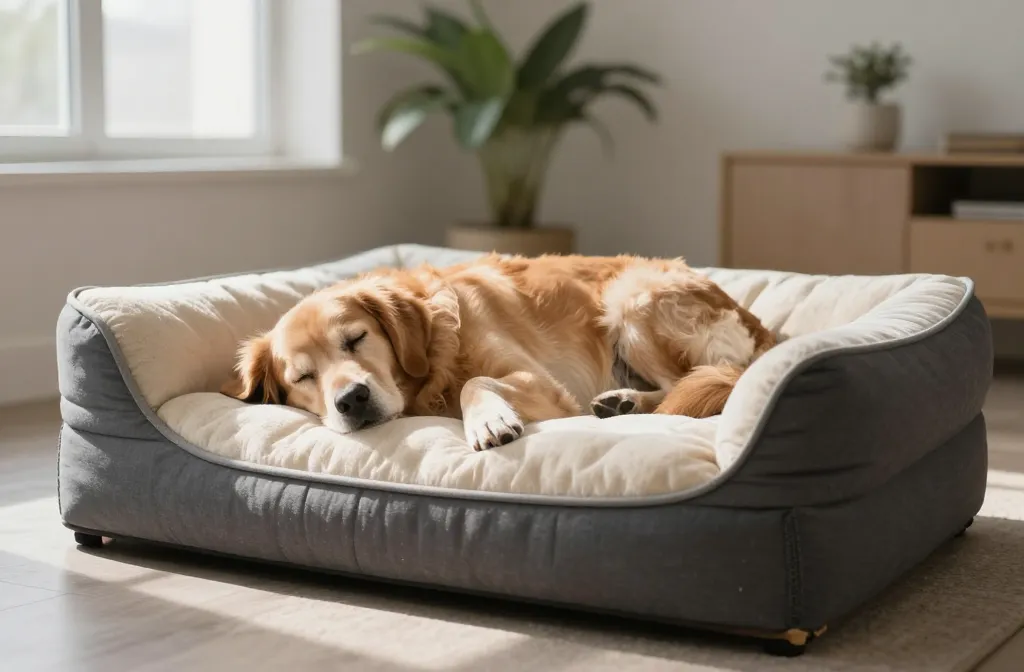
Why this question comes up
As dogs age, a few predictable changes affect how they rest and recover:
- Joints work harder. Cartilage thins, arthritis can flare, and movements after long naps feel stiff.
- Pressure points become a bigger deal. Elbows, hips, and shoulders take more load when muscle mass drops.
- Muscle tone changes. Less padding from muscle means bones meet the floor faster on soft beds.
- Temperature needs shift. Senior dogs can run cooler and may prefer slightly warmer, more consistent surfaces.
Because sleep is when the body does its repair work, the surface under your dog matters. A supportive orthopedic bed reduces painful pressure, keeps the spine in a neutral line, and makes getting up and down easier. That’s the whole goal.
Related: Best Beds for Senior Dogs
What actually makes an orthopedic dog bed supportive
1) Real foam density and thickness
Support starts with foam that resists bottoming out. Look for:
- Base foam that’s firm enough to hold your dog’s weight without compressing to the floor. For most medium to large dogs, that means at least 4 inches total thickness with a supportive base layer.
- A combination build: firm base foam plus a 1–2 inch comfort layer on top. The top layer contours to pressure points; the base keeps the body lifted.
- Density information when available. Not all brands publish it, but as a rough guide, human-grade foams in the 2.5–4 lb/ft³ range for memory foam and higher resilience base foam tend to hold up better.
- CertiPUR-US or similar: Indicates foam is low in certain chemicals and made to a basic safety standard.
If your dog is over 70 lbs, aim for thicker builds (5–7 inches total) or clearly marketed “large breed” orthopedic options with firm cores. For small dogs, you can get away with slightly thinner builds, but still check for a stable base.
2) Pressure relief plus spinal alignment
A bed earns the “orthopedic” label when it does two jobs at once:
- Distributes weight to reduce hot spots at the elbows, hips, shoulders.
- Keeps the spine level so joints don’t sit at awkward angles.
You’ll often see memory foam on top for pressure relief and a high-resilience foam base for alignment. Some beds use latex foam instead of memory foam; latex is bouncier and sleeps a bit cooler while still contouring. Either approach can work if the overall build is thick and firm enough. Multi-layer design: A firm base (for structure) plus a top comfort layer (for pressure relief) is more reliable than a single squishy slab.
3) Bolsters that are actually supportive
Bolsters around the edge aren’t just decorative. A good bolster lets your dog prop the head or brace the back, which can reduce neck strain and help anxious dogs settle. Look for:
- Bolsters with structure, not just loose stuffing. They should feel substantial when you press them.
- A lowered “entry” side if your dog has mobility issues, so they don’t have to step high to get in.
4) Non-slip, easy-entry design
For dogs with wobbly back ends or stiff hips:
- Non-slip bottoms keep the bed from sliding when they launch themselves up.
- A front cutout or lower side helps with easy entry and exit.
- Rectangular shapes usually offer more stretch room and easier repositioning than small ovals.

5) Durable, washable covers
Comfort isn’t just foam. A breathable, tightly woven cover prevents heat build-up and helps the foam do its job. What to check:
- Removable, machine-washable cover with a sturdy zipper.
- Water-resistant or waterproof liner under the cover to protect the foam from accidents or drool.
- Textured fabric for traction when your dog stands up.
6) Temperature management
If your dog likes cool floors, heat retention may be an issue. Memory foam can trap warmth. Options:
- Gel-infused or ventilated top foam to reduce heat build-up.
- Latex foam, which tends to sleep cooler.
- Swap seasonally: add a fleece blanket in winter, a breathable cotton sheet in summer.
Common misunderstandings
- “Softer is better.” Not for joints. Very soft beds let hips sink, throwing the spine out of line. You want cushion on top and firmness underneath.
- “Egg crate foam equals orthopedic.” Plain egg crate can help with airflow and light pressure relief, but thin, low-density versions compress fast and don’t support bigger dogs.
- “My dog is young, so no need.” Active dogs benefit too. Good support helps prevent calluses and elbow wear, and it’s easier on joints after long runs or play.
- “As long as it says orthopedic, it’s fine.” The term isn’t regulated. Check thickness, foam layers, density if listed, and the return policy.
Practical guidance: how to choose the right bed today
Step 1: Match size to sleep style
- Sprawlers need a rectangular bed at least as long as your dog from nose to base of tail, plus a few inches.
- Curled sleepers can use a slightly smaller footprint, but still prioritize a firm base and a supportive bolster.
- For dogs that switch styles, go bigger and choose a 3-sided bolster with a low entry side.
Step 2: Pick the right foam build
- Under 30 lbs: 3–4 inches total can work if the base is firm. Memory foam top or latex top is fine.
- 30–70 lbs: 4–6 inches total with a firm base and 1–2 inch comfort layer.
- 70+ lbs or deep-chested breeds: 5–7 inches total, focus on high-resilience base foam and structured bolsters.
Step 3: Check the cover and liner
- Look for a washable cover rated for frequent laundering.
- A waterproof or water-resistant inner liner protects the foam. Accidents are easier to manage when the core stays dry.
- Non-slip underside is a plus on hardwood or tile.
- Tug the zipper, feel the seams, and look for reinforced corners.
Step 4: Test the “bottom-out” at home
When the bed arrives, press your hand firmly through the center. If you can feel the floor easily, it’s too soft or too thin for your dog’s weight. Have your dog lie down and slide a hand under their hip, if there’s almost no give left in the foam, consider exchanging for a thicker or firmer model.
Step 5: Set it up for success
- Place the bed where your dog actually rests, often near your couch or in the bedroom, not in a busy hallway.
- Add their favorite blanket or a worn T-shirt so it smells familiar and inviting.
- Feed a treat or a chew on the bed for positive associations.
- Add a small pillow or bolster if your dog likes a chin rest, and there’s no bolster
- Keep your old bed nearby for a week, then slowly phase it out.
- If floors are slick, add a small rug “runway” to the bed so they don’t slip on approach.
- For dogs who overheat, avoid direct vents and sunny spots in summer.
- If stiffness is worst in the morning, keep the bed away from drafts and cold floors.
Step 6: Notice the early wins
Signs the bed is helping:
- Fewer position changes overnight.
- Easier stand-ups with less hesitation.
- Less elbow callus irritation and fewer pressure marks after naps.
- Choosing the bed over bare floors more often.
When to consider extras
- Heated pad with thermostat for very arthritic seniors who run cold. Keep it low and under supervision.
- Ramp or low step if your dog still prefers the couch but struggles to jump.
- Orthopedic crate mat for travel or car rides so support stays consistent.
Special Cases: Post-Surgery, Arthritis, and Large Breeds
Some dogs need extra support. A few small adjustments can make a big difference.
For dogs with arthritis or joint pain:
Choose thicker, denser foam with a soft comfort layer on top for pressure relief. Adding a washable fleece topper can provide gentle warmth that soothes stiff joints. Keep the bed away from drafts, cold tile floors in winter can aggravate soreness.
For large and giant breeds:
Go up a thickness level. Bigger dogs compress foam faster, so look for a high-resilience base layer that won’t bottom out. Reinforced stitching and a durable zipper also matter, since heavier dogs put more stress on seams.
A rectangular mattress-style bed with structured edge support usually offers the best stability and stretch space.
Budget-smart tips
- If you can’t find density specs, read reviews from owners with similarly sized dogs and note comments about sagging over time.
- It’s better to buy a simpler, firm, two-layer bed with a washable cover than a fancy-looking bed with soft, thin foam.
- Protect your investment with a waterproof liner. It extends foam life significantly.
FAQs
Do small dogs need orthopedic beds?
Yes. They have joints and pressure points too. They won’t need as much thickness as giant breeds, but a firm base with a soft top still helps, especially for patella or back issues.
Memory foam or latex, what’s better?
Both can work. Memory foam contours more; latex is springier and cooler. Choose memory foam for max pressure relief, latex for a cooler, slightly firmer feel.
How long should a good orthopedic bed last?
With a quality foam core and a protective liner, expect 2–4 years before noticeable sagging, longer for lighter dogs. Rotate the bed every few months to extend life.
Are bolsters necessary?
Not required, but helpful. Many dogs like head and neck support. Bolsters also provide a stable edge, which can make getting up easier.
How do I clean it without ruining the foam?
Remove and machine-wash the cover per the label. Wipe the waterproof liner. Spot clean foam only if needed and let it air dry fully before reassembly.
What if my dog still chooses the floor?
Try moving the bed to their favorite spot, add a familiar blanket, and consider a cooler-feeling top layer. Some dogs prefer a firmer surface; you may need a denser or thinner comfort layer.
That’s everything you need
The right orthopedic dog bed doesn’t need flashy claims. It just needs the right layers, real support under pressure points, and a practical design your dog can use every day. When your dog sleeps comfortably and can rise without wincing, you’ll notice better moods, smoother walks, and more interest in play.
If your dog hesitates before standing or avoids their current bed, it may be time to upgrade their support. A well-built orthopedic dog bed is one of the simplest ways to protect their joints long-term.
This article is for informational purposes only. For advice specific to your dog always speak to your vet.